

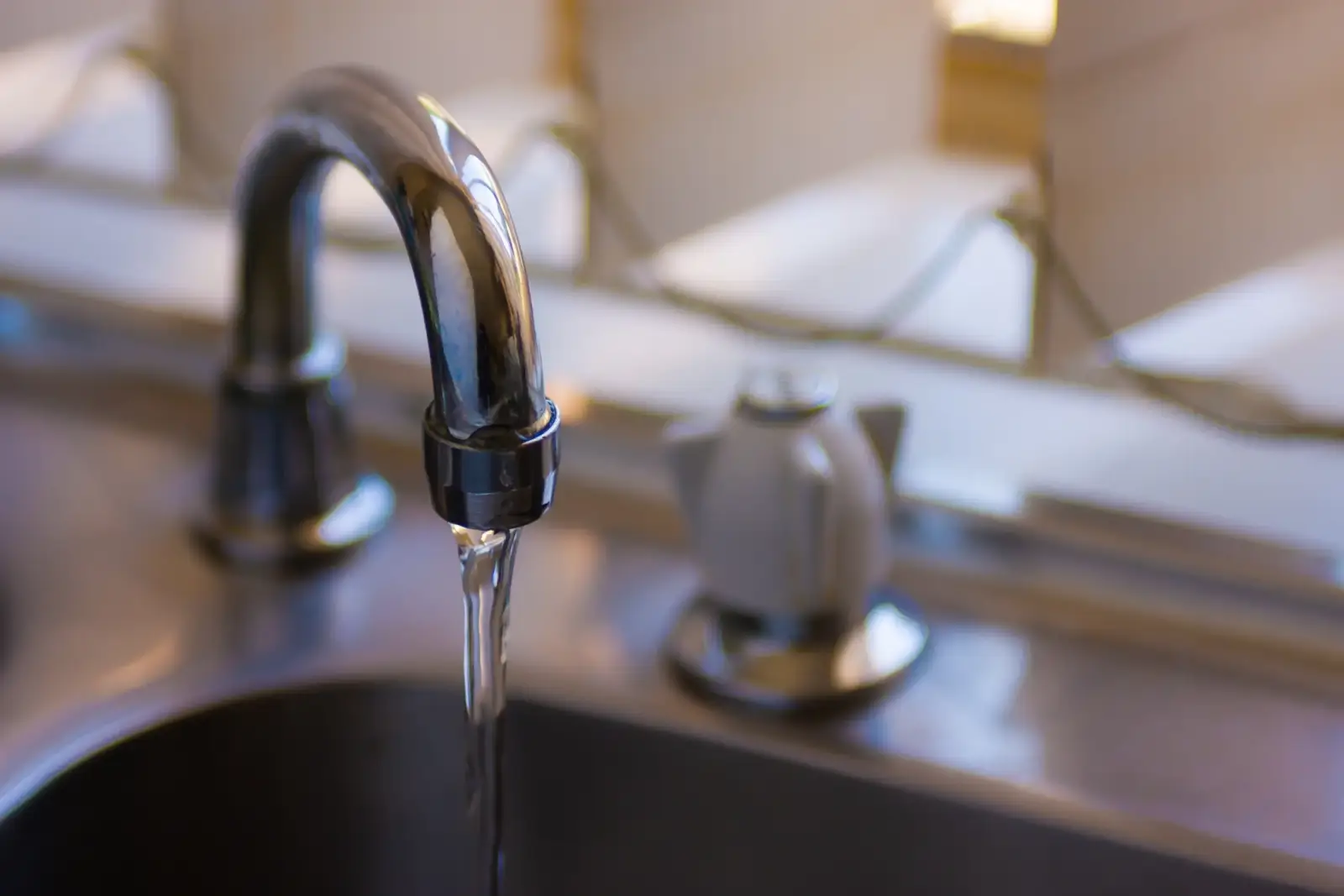
Being stationed in Guam comes with many challenges: geographic isolation, high cost of living, and intense weather, but recent investigative reporting by The War Horse, in partnership with The Margin, has brought to light an even greater concern: the presence of unsafe dieldrin levels in local drinking water. Dieldrin is a banned pesticide that can be found years after application in the environment, and long-term exposure is a probable cancer risk. It has been revealed that dieldrin was present in unacceptably high quantities in the well water of Yigo, the village bordering Andersen Air Force Base.
Joint Region Marianas is the lead public affairs office in this case, and offered the following statement to include in this piece.
“Joint Region Marianas takes the health and safety of service members, families and the Guam community seriously. In September 2025, the Navy tested all active military drinking-water wells on Guam for dieldrin. Results were either non-detect or below the Guam Environmental Protection Agency’s Interim Action Level for dieldrin.






















The Navy continues to work closely with the Guam Environmental Protection Agency and U.S. Environmental Protection Agency and has initiated a study to better understand potential sources of dieldrin on military property. We remain committed to providing accurate, verified information as that work continues and to protecting the health and safety of those who live and work on our installations,” said Public Affairs Officer Lt. Cmdr. Kristina M. Wiedemann as spokesperson for Joint Region Marianas.
Safety concerns, stress and guilt
For military families living in that community of Yigo, the uncertainty around their safety has led to stress, frustration and guilt.
Since moving to Yigo at the beginning of April, Jenni Osborne has noticed a worrying pattern of health problems for her twin daughters. The nearly 11-year-old girls have experienced “skin peeling off their hands and feet, nails peeling off and soft down by the cuticles [and] facial rashes.” While Guam Waterworks Authority (GWA) installed a granular activated carbon treatment system to the Y-15 treatment system in 2025 and there is no longer a “do not drink without treatment” warning, Osborne worries that the water could still be connected to her daughters’ skin changes. Osborne didn’t know about the nearby well’s problematic history until September when she read articles about it on social media. To try to prevent further problems, her family now uses bottled water for brushing their teeth and has filtered water at the kitchen sink to wash their hands and faces.
Taryn Royall, a wellness coach and mother of two who lives in Yigo, has also expressed worry about the status of “forever chemicals” in the water supply. To keep her family safe, she has “monitored the wells and followed the boil water notices very strictly.” She initially used a Brita filter system but “felt that wasn’t enough.”
Instead, she and her husband invested in a reverse osmosis system, but had to be mindful of the property.
“We are renters so installing a RO system was tough, and we had a lot of trouble getting a countertop system to us,” she said. “Eventually we installed a RO system under our sink, and my husband built a spigot for it so we wouldn’t damage the rental.”
They try to further limit their exposure to toxins by eating organic foods and making their own laundry products, but Royall says the lack of accessible and affordable organic and chemical-free products in Guam poses a challenge.
One source, who wished to remain anonymous, has lived in Yigo for over three years, and said she would have made drastically different decisions if she had known the truth about the contaminated water. Because there wasn’t a home available on base when they arrived in Guam, they selected a home in Yigo; part of its appeal was its water softener and filtration system. Believing the water was safe and that the filtration system was sufficient to clean their tap water, their family —which includes their son, an infant at the time— unknowingly drank the contaminated water for years.
She is racked with guilt over this decision.
“For the rest of my life, I will be in a constant state of worry about my child’s health after knowing that, for the first few years of his life —the most important, formative years— he was exposed to unsafe water contaminated with a cancer-causing chemical,” she said. “Had we been informed, we would have done things very differently.”
Dieldrin, pollution and bacteria
While Y-15 had the highest concentration of dieldrin, most of the wells throughout the island have shown varying levels of contamination. A March article from Guam Pacific Daily News cited that over 75% of GWA’s water wells contained traces of dieldrin, including in the village of Mangilao where I lived for over two years.
I worry that basic hygienic tasks could have put our family at risk for health complications but I know that we may never know for sure. As a mother, I felt I was in a losing battle: while we used filtered water for cooking and drinking, we were still washing our dishes, bodies, faces and hands with the tap water and cleaning our daughter’s pacifiers and bottles, as well as parts of my breast pump, with it.
On top of the dieldrin concerns, there were boil notices after Typhoon Sinlaku for 9 days and Typhoon Bavi for 15 days for homes that lost water for 48 hours or more; this applied to my family for both storms. Guam Environmental Protection Agency releases a list of polluted beaches each week, and there are repeated reports of high bacteria levels.
From the kitchen sink to the sea, the potential to become sick from the water is worryingly strong. We come to Guam with promises of paradise during tours of duty — and we leave with fears of poison.