


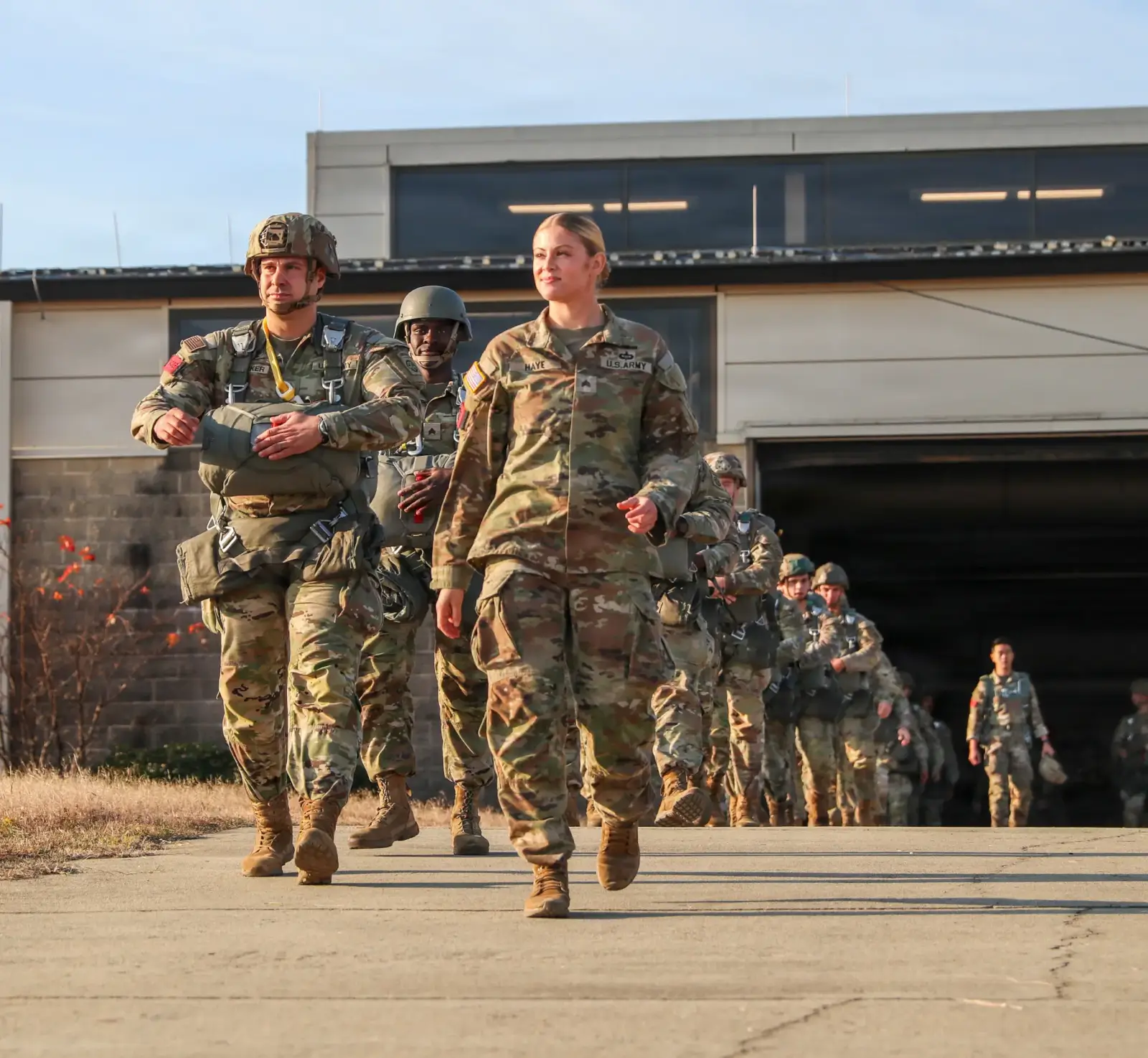
In a letter dated Aug. 30, 2026, from the 82nd Airborne Division command team, it was announced that the division, the primary fighting arm of the XVIII Airborne Corps, will remain in the region into 2027 for a 12-month deployment.
The letter, penned by Division Commander Maj. Gen. Brandon Tegtmeier and Division Command Sgt. Maj. James Bradshaw, began by expressing “deep gratitude” for paratrooper families.
“Behind every Paratrooper stands a family who carries an equal share of this mission. Your quiet strength lets this Division answer the Nation’s call anywhere in the world, at a moment’s notice,” the letter said.























‘Getting rocketed sucks’
As an Army veteran turned Army civilian focusing on soldier suicide prevention and high-risk behaviors, David Arthur knows the risks for service members returning home. As a father to a junior enlisted paratrooper among the elements of the division now deployed to the Middle East, he said he hopes his son doesn’t come home like he did.
“I knew I came home different, and I knew why, and I know what the struggle was,” Arthur said. “His ambition is different than mine was.”
Arthur explained that he leveled with his son because he had experience himself. With his civilian job at Fort Bragg, North Carolina, he said, “‘Bub, sooner or later, [since] you’re airborne, you’re coming to Bragg. And, you’re going to deploy because that’s just what they do.’ So, here it happened.”
In 2009, Arthur deployed to Afghanistan as an Army chaplain. He described it as a high-tempo deployment, often getting roughly four hours of sleep, either outside the wire or on the forward operating base (FOB), helping in suicidal ideation, crisis counseling, and mediation between leaders.
“I was on call 24/7, I was in my soldiers’ lives all the time, whenever they called me, whatever it was,” he said. “If I wasn’t outside the wire on the mission, I was on the FOB taking care of soldiers when they needed me.”
His method involved identifying protective factors, walking soldiers back from the edge, and standing beside them as they spoke to commanders.
Now Arthur texts his paratrooper son once or twice a week to check in with him.
That rapport and shared understanding of deployment is why his son shares things back like, “‘Dad, your stories were true. Getting rocketed sucks,’” Arthur said.
“He knows he can talk to me—all three of my kids know that—and so I’m thankful for that,” Arthur said. “They trust me and they know I’m going to listen.”
His advice to paratroopers and other service members experiencing longer-than-planned deployments: “[I would] just remind them, ‘we didn’t ask for this part, but it is what we signed up for, and we knew it was coming.’ Continue to stay mission focused. When you’re off, communicate with your family back home if you’ve got the freedom to. Keep some of your normal routines as normal as possible. And then, of course, see [the chaplain] if you need to.”
‘I will get through this’
For Minnesota National Guard satellite operations soldier Nathan Wendland, it was a local reporter who broke the news that four months would be tacked onto his unit’s 12-month deployment to Iraq in 2007. With having trained for six months before deploying, the unit would now have 22 months of mobilization.
“The families of the entire 34th Infantry Division… they all got that news directly from TV, and our units on the ground in Iraq first heard about it from our family members,” Wendland said.
His wife remembers the last extension and said she was “devastated.” Additionally, his mother’s plans for his homecoming were scrapped. Understanding the possibility of upset, the unit sent psychiatrists “… to check up on all the people in bases, just to make sure that they weren’t missing something,” Wendland said.
After the extension announcement, the Department of Defense made a policy change that limited “total mobilization time of Guard and Reserve units to 12 months.”
During a 2007 American Forces Press Service and Pentagon Channel interview following the policy change, Thomas F. Hall, who was the assistant secretary of defense for reserve affairs at the time, said, “We have come to the conclusion that based on numerous inputs, that 18- to 21-months over a long war, over a career, is just too much.”
“It is over and above what employers and families and individuals will accept and still remain in the Guard and Reserve.”
Later, the unit received Congressional recognition for the “longest continuous deployment of any United States ground combat military unit in Operation Iraqi Freedom.”
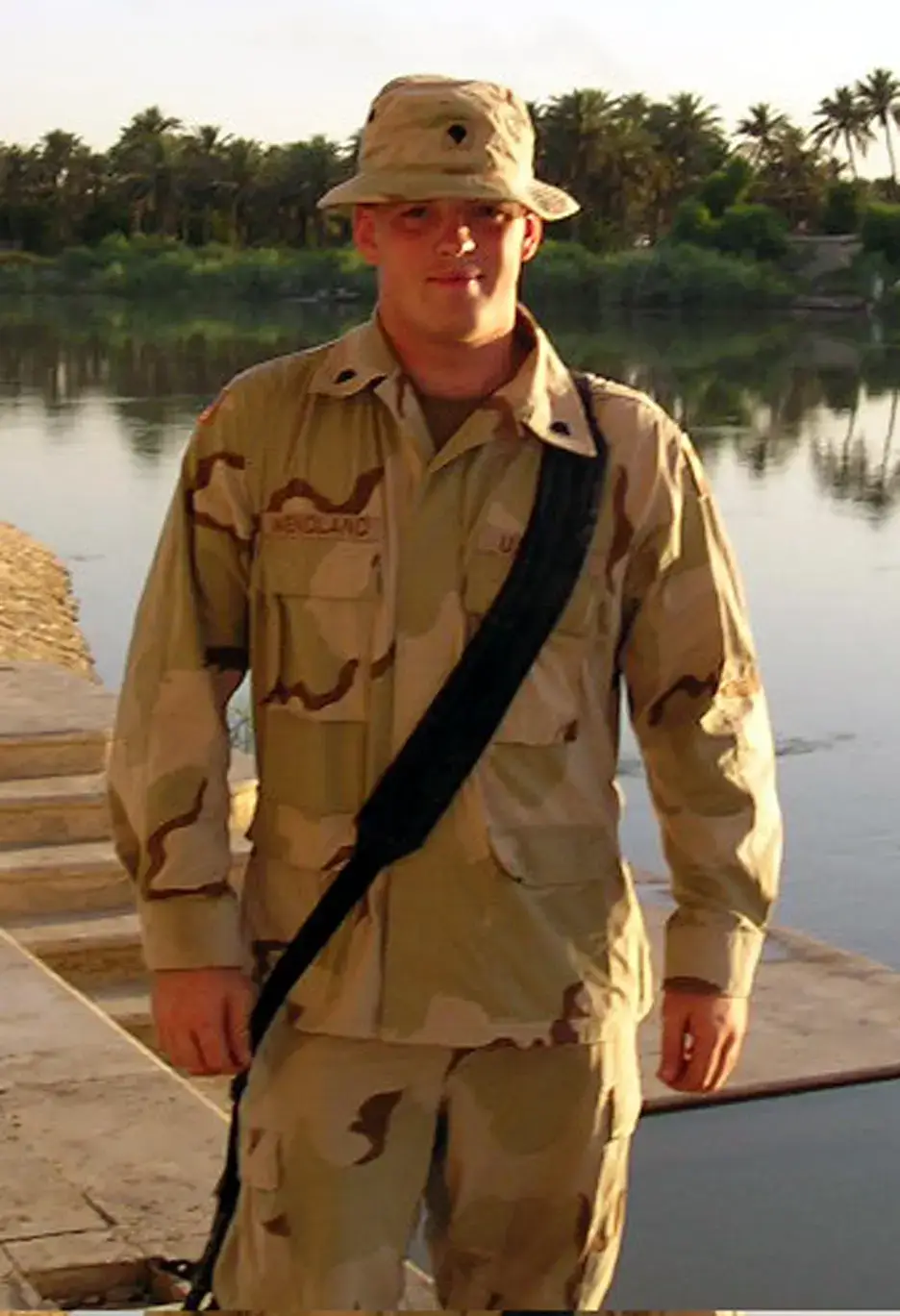
During Wendland’s first deployment to Iraq as an active-duty network switching systems operator, he was subject to an Army-wide stop-loss—the involuntary extension of active duty service past the original contract or retirement date—and extended in theater.
“It didn’t bother me at the time, of course,” he said. “It’s an army; there was a purpose.”
To the paratroopers extended last month, Wendland said it may be terrifying that they have to survive another four months in the war zone, but reframing their mindset can help lighten the load.
“I remember checking in all the time with myself and thinking, ‘You’re in war. It’s gonna suck. Just do whatever they tell you to do,’” Wendland said.
“Remember: ‘Other people have gotten through this. This is terrifying, but I’ve been doing it. I’m still doing it, and other people are doing it, and others have done it before me, and I will get through this.’”
His advice for the units currently deployed overseas: “It’s going to suck, and that’s just going to be what it is. You have to keep telling yourself that there is an end to it, and you will see an end to it. All you have to do is keep doing what you’re told, and you rely on your training—it’s there for a reason. You keep your head down. You survive the firefight.”
Find camaraderie after the military
Military Police (MP) veteran Justin Harvey had five deployments to Iraq under his belt and was ready to close out his military career before he got the news that he faced a stop-loss in theater and was left no time or leadership to assist him in his transition out.
The planned 12-month tour was extended to 15 months due to Iraq War troop surge, when in 2007, President George W. Bush made the decision to send 20,000–30,000 additional combat troops into Iraq to stop severe sectarian violence.
Harvey said he and his fellow MPs faced unique pressures in this era, being frequently cycled between combat missions and law enforcement duties without adequate downtime for personal transition or recovery.
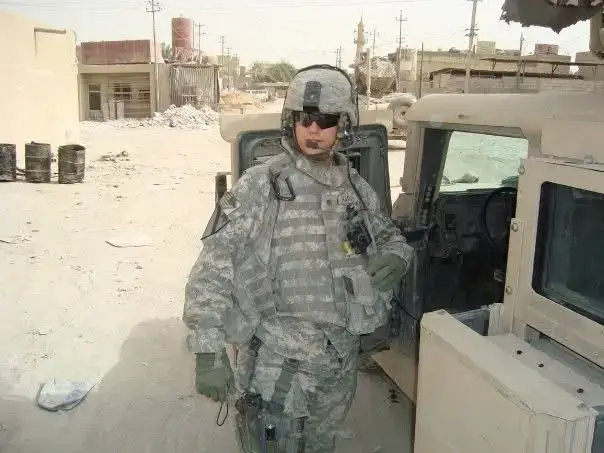
He was used to the operational tempo of his deployments, but when he returned, he felt completely unprepared to enter into the civilian workforce.
“That was the worst part about it because I knew a lot of guys like infantry and stuff, and they would come back for two years, and they got to go to college and do all these other things,” Harvey said. “That was unheard of in the MP Corps.”
Staying in a mission mindset helped the service, but didn’t set Harvey up for success. He said had he known, he would’ve spent more time working on his resume, getting a head start on VA benefits, and building out a letter explaining why he was applying from his duty station in Washington to a job in Iowa where he intended to live after his service.
Since his transition, Harvey said he’s found camaraderie at a CrossFit gym.
“Having communities that support you, and building with them, that’s the biggest thing you could probably do,” he said.
His advice to deployed service members: “Take care of yourself and the people around you, and especially yourself—you can’t replace yourself.”
‘It will not be forever’
Jaime Waterbury related to the MP Corps minimal dwell time as she worked alongside Special Warfare—Air Force Tactical Air Control Party (TACP) and Joint Terminal Attack Controller (JTAC)—doing back-to-back Iraq tours from 2005–2010.
She served four years active duty in the Air Force before transitioning and serving seven years in the Air Force Reserve. Although she said she didn’t personally face deployment extension, the TACPs and JTACs were always tasked to support the Army, and the Army kept getting extended.
“On my tour, as I was departing Iraq, everybody was incredibly bummed and sad as to what was going on, and they said they already notified them that they would be turning right back around in six months and going to Afghanistan, so their dwell time was incredibly minimal,” she said.
During her deployments, she said every day felt like “Groundhog Day.”
“You’re in the same uniform, you don’t have a day off; it’s very continuous,” Waterbury said. “I told myself, ‘It will not be forever. It will be okay.’ And, then I supplemented that with ice cream. It’s just trying to stay positive.”
Speaking directly to the deployed 82nd Airborne paratroopers and soldiers, Waterbury had some final advice.
“It will end eventually. I know it’s hard. You’re separated from your family. You’re not there. You’re not in the States. Everyone deployed, they think the world is passing them by, and they’re missing out. And in a sense, in a way, I do absolutely agree with that. It’s hard not to be there with your family, but it will come to an end. [You] will get to hopefully come home soon.”