


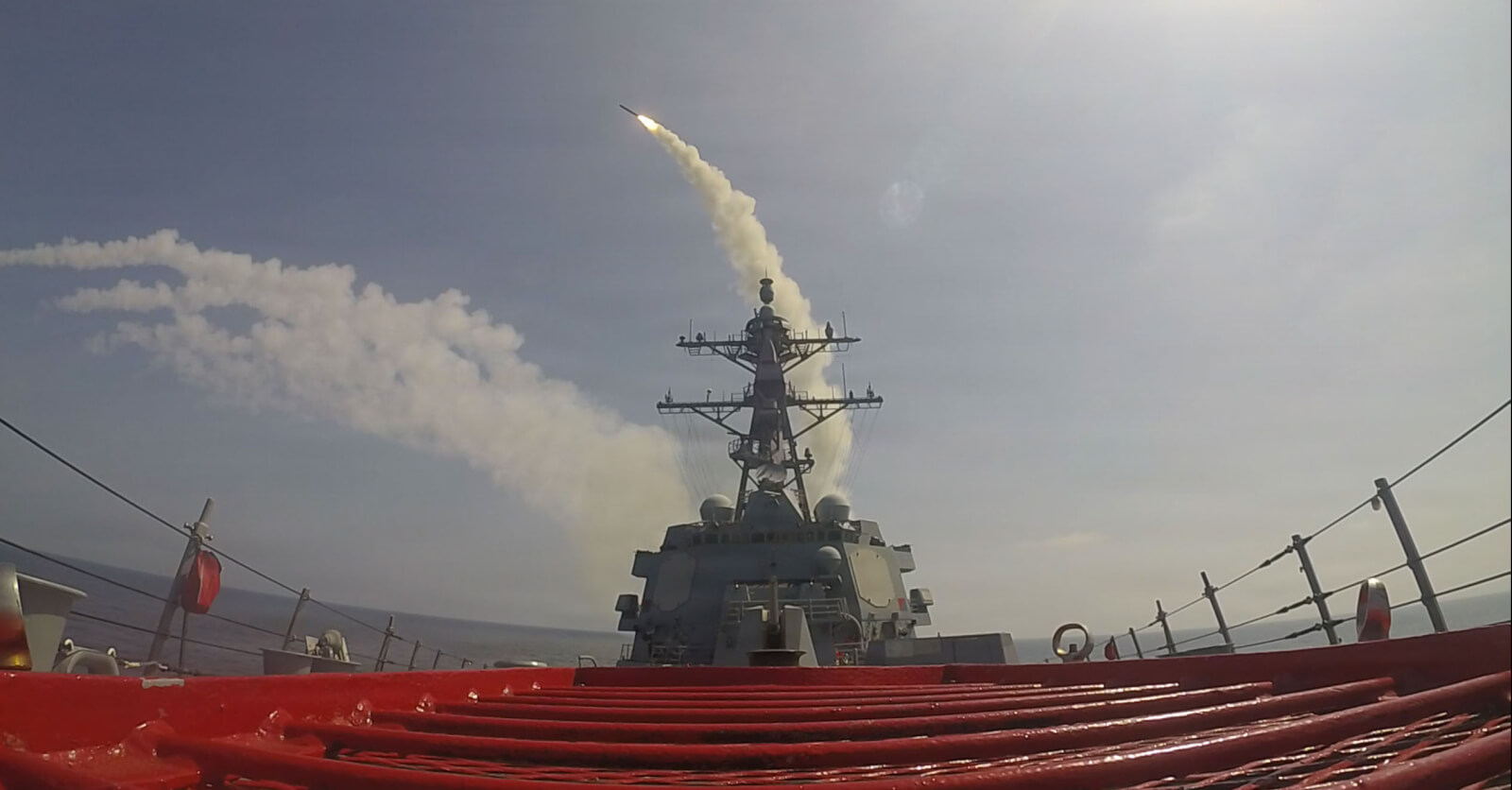
A military life expert who advised families on resources in the years following the Sept. 11 attacks is sharing how today’s generation can prepare for deployment in the wake of Operation Epic Fury.
Lizann Lightfoot, whose Marine husband retired in 2023, said she felt waves of emotion as she heard news of U.S.-Israeli strikes on Iran — referred to as Operation Epic Fury for the American portion of the mission. Now as a veteran family, she saw “both sides of the coin” — devoid of the “personal worry and fear” for her husband’s safety, but immediate thoughts for those “going through this.”











“My second wave of emotions was for all the families who are still active duty,” Lightfoot, whose brother is currently in the Navy, told Military Families Magazine. “But it was definitely a different experience to realize that civilians probably process political events with a very different mindset than what active-duty military does.”
Operation Epic Fury was launched Feb. 28 by U.S. Central Command (CENTCOM), “striking targets to dismantle the Iranian regime’s security apparatus, prioritizing locations that pose an imminent threat.” Several high-profile deployment extensions occurred as U.S. forces built up their presence in the Middle East, which includes the USS Gerald R. Ford that has been underway for more than eight months.
“Extended deployments demand endurance,” said Adm. Daryl Caudle, Chief of Naval Operations, in a press release. “They ask Sailors to miss births, anniversaries, and everyday moments at home. They ask families to shoulder additional responsibility. That sacrifice is real, and we do not take it lightly. The nation relies on these Sailors to remain forward and ready, and they continue to meet that responsibility with professionalism and pride.”
But for those stateside, questions began swirling about what units/personnel might be next to deploy. Lightfoot outlined immediate areas to focus on.
“I think a practical checklist is really important, and probably a certain generation [post 9/11] had it down and had binders, and it was a kind of frequently repeated piece of advice,” Lightfoot said. “But it’s quite possible that it hasn’t been reiterated as much recently.”
Paperwork
- Power of attorney (POA): “a legally binding planning tool that gives one person the authority to act on another’s behalf for legal or financial issues for a specified time,” according to Military OneSource. Find the nearest legal services’ office to complete the document at no cost.
- Family Care Plan
- Wills and RED (Record of Emergency Data) form
- Copies of the official deployment orders
- Renew military ID cards, driver’s licenses, car registration, etc., in the event anything expires during deployment
Finances
- Make a new deployment budget together, decide who will pay bills and when.
- Set up allotments from service member’s paycheck, if desired.
- Write down all passwords to access banking accounts, online bills, MyPay, military LES forms, etc.
- Adjust TV or internet subscriptions, insurance, and phone plans to save money during deployment.
- Check with credit unions/banks about a reduction in credit interest. For example, USAA will drop to 4% for eligible accounts.
- If the service member will be using a credit card, call the company to alert them to out-of-country travel.
Home front
- Walk through of home: Ex. Where is the main water turnoff? How does the HVAC system work? Is there any required maintenance coming up?
- Vehicle maintenance: Is it due for an oil change or any type of routine maintenance? Set up reminders to start the vehicle(s) periodically so the batteries don’t sit dormant.
Read more: Homefront survival guide: planning for the first deployment
Important information
- Have a contact for the unit’s family readiness program
- Review information on how to send a Red Cross message
Lightfoot, also known as the “Seasoned Spouse,” developed a series of deployment resources during her husband’s career that she is now providing access to for free.
Deployment Masterclass: 12 videos and a downloadable deployment guide
Facebook support group: “Handle Deployment Like a Boss” for spouses and significant others with a deployed service member
Communication
For those already experiencing a separation, like families of the USS Ford, Lightfoot explained it is important to have realistic expectations about communication — and not to assume the worst if you hear nothing. Ideally this is a conversation that would have happened ahead of a deployment.
If “that conversation hasn’t occurred, the spouse at home is thinking, you know, that they’re either neglected or their service member is in danger, or any 100 number of things,” she said. “Setting some ground rules on what is realistic [communication frequency] and possible, I think, is super helpful for spouses who are used to just instant text communication every day.”
READ MORE: 9 OPSEC tips for military families
Overall, Lightfoot sees preparation as providing as much “peace and stability” that is possible in such an unpredictable way of life.
“I’ve always given the advice that when things are feeling out of control with the military, to focus inward and focus on the things that you can control. The world can feel really big, really overwhelming and really terrifying at times. And the more that I focused on my family, my house, my bedroom, whatever was going to be the smallest, controllable, safest space, that’s where I would start.”
Lightfoot’s Facebook group currently has nearly 9,000 members at different stages of the military life cycle. She added that it is a great resource for knowing you are not alone. Click HERE to connect.
Other resources for military families
Military Family Advisory Network
Military Spouse Advocacy Network
National Military Family Association