


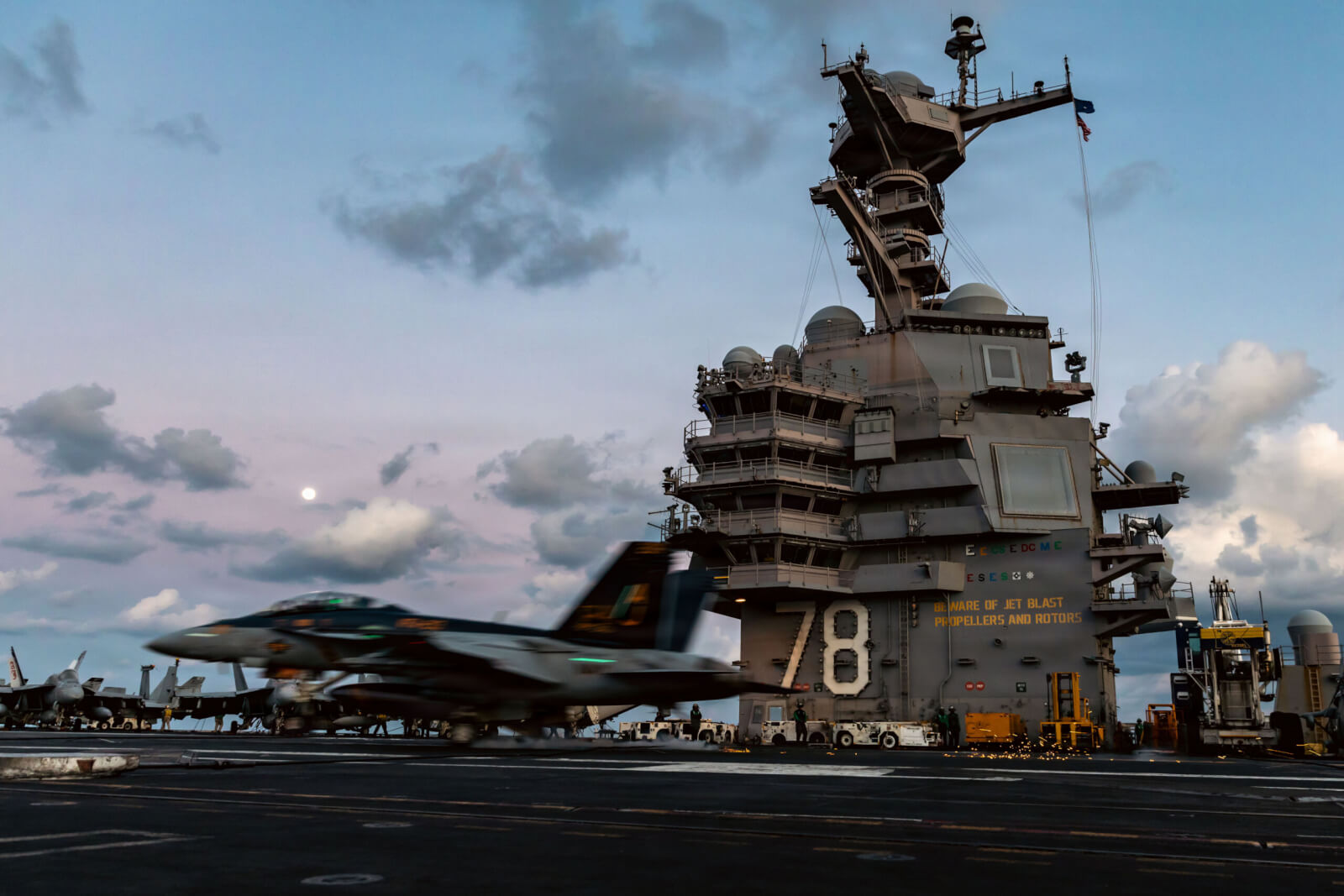
When Air Force wife Sarah Smith saw that the USS Gerald R. Ford had its homecoming date recently extended — potentially past 300 days at sea, breaking a modern aircraft carrier deployment record — she had one empathetic emotion: heartbreak.
“As you get closer to their return date, you make preparations. You let yourself get excited,” she said. “And then the rug is pulled out from under you. It’s like the beginning of deployment all over again.”
Married to an Aircraft Fuel Systems mechanic, it’s an experience that Smith, a licensed counselor in Nebraska, knows personally. Her husband left for South Korea when their daughter was two, and what was supposed to be a three-month deployment eventually doubled. Now Smith professionally counsels military families, some facing deployment extensions.





















“It’s really an emotional roller coaster,” said Smith. “They were making plans for the spouse to come home, and now they’re back to readjusting to the loneliness and rhythms.”
But staying mentally stuck isn’t the only option. Even with unwelcome news like deployment extensions, military families can still survive and even grow. Smith recommends allowing yourself to feel all your feelings. Cry, scream in your car, punch a pillow, vent to a friend, kickbox — it all counts as pressure release. Otherwise, you risk negatively affecting your other relationships, physical issues like chronic illness or a weakened immune system, and feelings of falling apart.
Another common feeling is anger — from the service member, spouse and/or children.
“You’ll see kids act out at home and school, because they often don’t know how to express their feelings in a healthy way,” Smith said. “Plus, they have learned that their home-parent is also struggling, so they often hesitate to speak about how they’re feeling — they don’t want to make it worse.”
Spouses, meanwhile, often withdraw and shut down, because who wants to talk about the deployment and extension? It’s just easier to avoid questions and people altogether. And that’s not necessarily a bad thing, as time spent alone (in combination with other cherished activities like exercise, social clubs, volunteering, church, learning new skills, being outside and hobbies) can be replenishing.
“Taking care of ourselves is the best and most efficient thing we can do to be successful during these hard times,” said Smith. To that end, for your own wellbeing, don’t set firm homecoming dates in your mind; think of your loved one’s return as a happy surprise that happens when it happens.
Recognizing your place in the deployment cycle of emotions can help, too:
- Before leaving, drawing apart is normal. “This could look like starting arguments or choosing to spend time apart,” Smith said. “It’s easier to leave when we’re ‘mad’ at each other.”
- During early deployment, expect to feel stressed, overwhelmed, sad and angry.
- At the midway mark, rhythms are in place. “There is still sadness and longing, but life has hit a tempo, adjustments have been made, and it’s ‘normal’ that the spouse isn’t there,” said Smith.
- Approaching homecoming can be a highly emotional time, with memories and anticipation flooding your mind.
Moving backward to a previous stage — or not knowing which stage you’re even in — can be very frustrating. It might lead you to wonder: should you share that frustration with your service member?
Smith has a script for that: “I’m really sad and disappointed that the deployment has been extended, and I understand that you don’t have any control over this. I want you to know that I miss you and that’s why I’m sad. I bet you’re struggling, too.”
“This kind of share allows some vulnerability without placing more weight on the deployed spouse,” Smith said.
If typical coping strategies aren’t cutting it for your family, seek professional help. Military OneSource offers free, confidential counseling; call 800-342-9647.