




Blue Star Families (BSF) released the latest results of its annual survey last week, which reveals top concerns facing today’s military force and their families.
According to the 2025 Military Family Lifestyle Survey, the main issues facing active-duty military families are military spouse employment, military pay, time away from family, and a three-way tie between child care, BAH/housing concerns, and child education.
Military spouse employment
Military spouse employment remains a leading concern for the military community. In addition to the 23% unemployment rate of the active-duty spouse respondents, 70% of part-time or full-time employed spouses said they were underemployed.


















“I’d really like that to sink in with everyone,” said Lindsay Knight, Ph. D., BSF’s chief impact officer, on a media call. She stressed that while the statistic 1 in 4 unemployed military spouses receives a lot of attention, underemployment is also a huge concern for working military spouses.
Navy spouse Sarah, who requested only her first name be used, has a resume that is unusual, even among military spouses. Having been a surface warfare officer in the Navy herself, and then two years as a reservist, her skills range from negotiation tactics to medical teaching to military outreach. Even still, she has had a hard time finding employment.
“Being a military spouse has had a significant impact on the trajectory of my career, largely due to the 5.5 years our family spent overseas under Status of Forces Agreements. Those years were the best of my life, and I would not have traded them for a 9-5; however, finding meaningful employment since then has been extremely difficult and defeating,” Sarah said.
She detailed how she made a “deliberate effort” on her resume to attribute all of the nontraditional and unpaid work, highlighting “the skills required to do so in a high-stress, uncertain, and constantly changing environment.”
“However, I’ve found that employers still perceive these experiences as professional gaps rather than the distinct value they represent,” she added. “I wish employers would more readily recognize the assets military spouses bring to the workforce. Our resourcefulness, adaptability, leadership, and ability to perform under pressure are absolutely unmatched.”
Finances
Sixty-two percent of military families surveyed reported “living comfortably” or “doing okay” but 68% said that having two incomes is vitally important to their family’s financial well-being.
There is also a wide berth between struggling enlisted families and officer families. While 17% of officer family respondents said that they were “just getting by” or “finding it difficult to get by,” 51% of enlisted families who said they were only just making ends meet.
BSF has found that “the financial strain these families experience is often an unintended consequence of military service itself,” according to a press release, with “frequent relocations, out-of-pocket PCS costs, childcare challenges, and disrupted spouse education and careers” being common attributes of a military career.
“The military lifestyle is necessary, honorable, and carries unintended strains for families that BSF has chronicled for years, and in many ways see increasing this year,” said Kathy Roth-Douquet, CEO of BSF.
Food insecurity
Food insecurity among active-duty military families increased. Active-duty military respondents who are categorized as “having low or very low food security… increased since last reporting it in 2023,” from 16% to now 28%.
Twenty-two percent of the survey’s active-duty respondents said they ate less than they thought they should in the past year because there wasn’t enough food. Not only is food insecurity a concern for military families, but also healthy food access: 30% said that they sometimes or often could not afford to eat balanced meals.
The impact has been noticed by Monica Bassett, founder and CEO of Stronghold Food Pantry. The nonprofit supports active-duty military families by giving fresh groceries for nutritional meals, and has expanded since its launch in 2022 due to necessity.
“We have seen the increased need for military families facing food insecurity,” she explained. “In response to the demand, we have grown in our own outreach with ambassadors in 20 states and Pop-Up Pantries around the country. We remain ready to ensure military families can receive fresh and healthy food, along with pantry staples, and know that they are not alone.”
Child care
For 86% of the respondents concerned about child care, the main challenge is the high cost: 41% said they spend 20% or more of their monthly income on child care alone.
Additionally, 67% said long wait lists/lack of child care spaces are a burden, and more than half said the quality of care is a challenge.
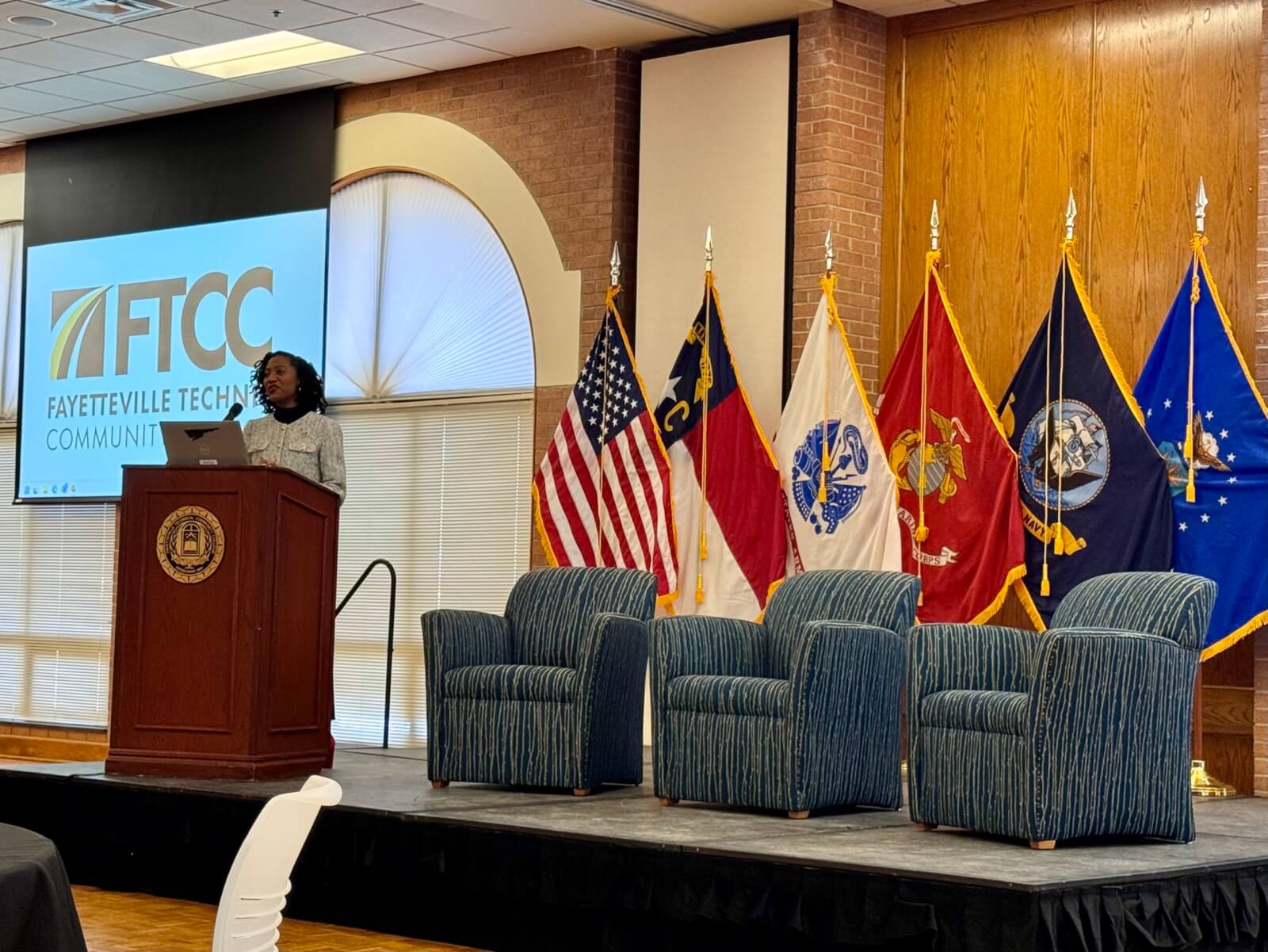
In an effort to address this issue, BSF and the North Carolina Department of Military and Veterans Affairs recently hosted the Military Community Childcare Roundtable 2026. This event, part of the BSF’s “Do Your Part” initiative in a joint effort with the National Governors Association, was for military, state and community leaders to discuss the lack of affordable, reliable child care for the military community.
“Child care is not a luxury,” said North Carolina Department of Military and Veterans Affairs Secretary Jocelyn Mitnaul Mallette at the event. “It is a necessity and it is mission critical.”