


With the number of fellow World War II veterans dwindling, an Idaho centenarian is sharing stories of his military service with younger people — which, at this point, means nearly everyone.
“I think mine was a generation that we probably will never see again,” said Navy veteran Fireman 2nd Class James “Jim” Stephens, now 101 years old. “We felt it was our duty to our country to join and serve. It’s hard to put into words.”
‘Hidden’ training point
Even so, words still come easily to the Coeur d’Alene resident — especially when he recalls his Navy days that lasted from 1943 to 1946 and the people he met during that time. Stephens worked as a boot camp swim instructor and then a hospital corpsman and driver in Oakland, California, before being discharged.























“The only time I was on board a ship was to unload the patients coming in,” Stephens said.
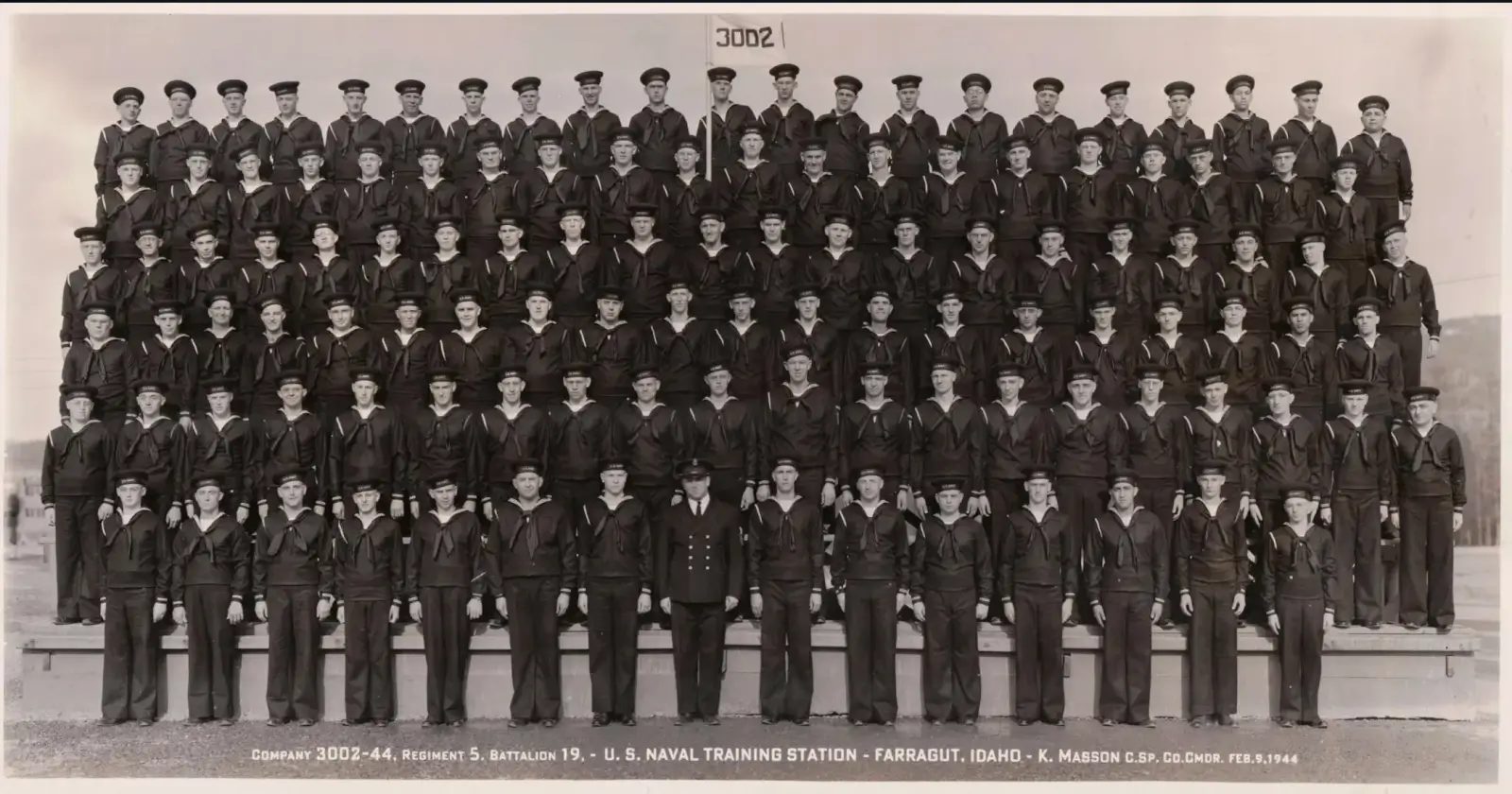
Another ironic twist for a sailor: Stephens, like more than 293,000 of his Navy brothers, graduated basic training at Farragut Naval Training Station in rural, landlocked Idaho.
Farragut’s location served as a “hidden” training point from Axis powers — but the Japanese weren’t the only ones with no inkling of its existence.
“I was really surprised when I got off the troop train and was in Athol, Idaho,” said Stephens, a businessman after the war. “I had thought they were sending me to San Diego and had never heard of Farragut.”
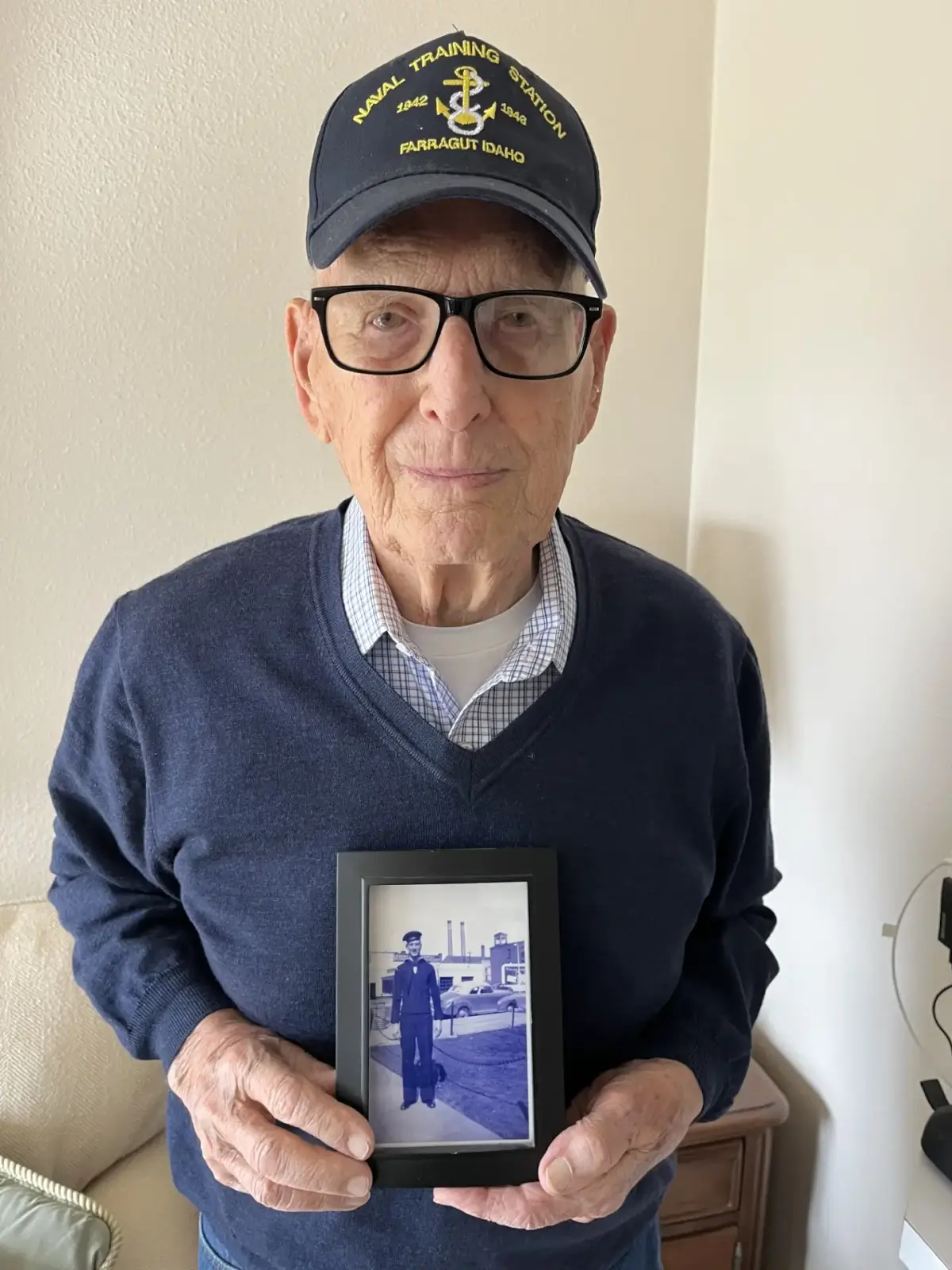
Only 16 years old when Pearl Harbor went up in oil-slicked flames during the attack in 1941, Stephens tried to join the Navy the following year but was rejected for wearing eyeglasses. So the California teen reluctantly turned to the Army at age 18, heading into the recruiter’s office on Dec. 6, 1943, with other volunteers.
After their physicals, someone divided the young men into two groups. “Those on the right, you’re going into the Army,” he barked. “On the left, come back in seven days — you’ll be in the Navy.”
Cold welcome to the Navy
Stephens did as he was told, eventually arriving in northern Idaho on Dec. 17. It wasn’t sunny San Diego as he had expected; it was icy cold and snowy Farragut, a far cry from his Santa Ana home. Though he had been born in Storm Lake, Iowa, and spent his first 11 years in the Midwest, he had embraced the Southern California lifestyle upon moving there in 1937, falling in love with the orange and walnut groves and frolicking in the Pacific as a “beach boy.”
To make matters worse, Stephens’ barracks was unfinished, exposing its occupants to the harsh winter weather just off Lake Pend Oreille. Stephens then got scarlet fever, and only after one week’s rest — still in the barracks — he was back to duty.
“I was never hungry in boot camp, but cold, yes,” he remembered. “We were pushed to the limit.”
Because he had been a YMCA swim instructor in Santa Ana, Stephens was chosen to stay at Farragut to teach other “boots,” as they were known, how to swim. From there, he attended hospital corpsman school, also at Farragut, before departing for Oakland.
‘Members of a group’
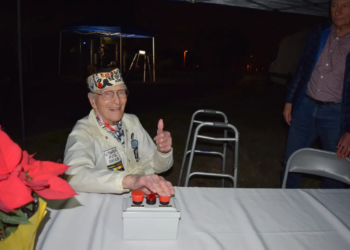
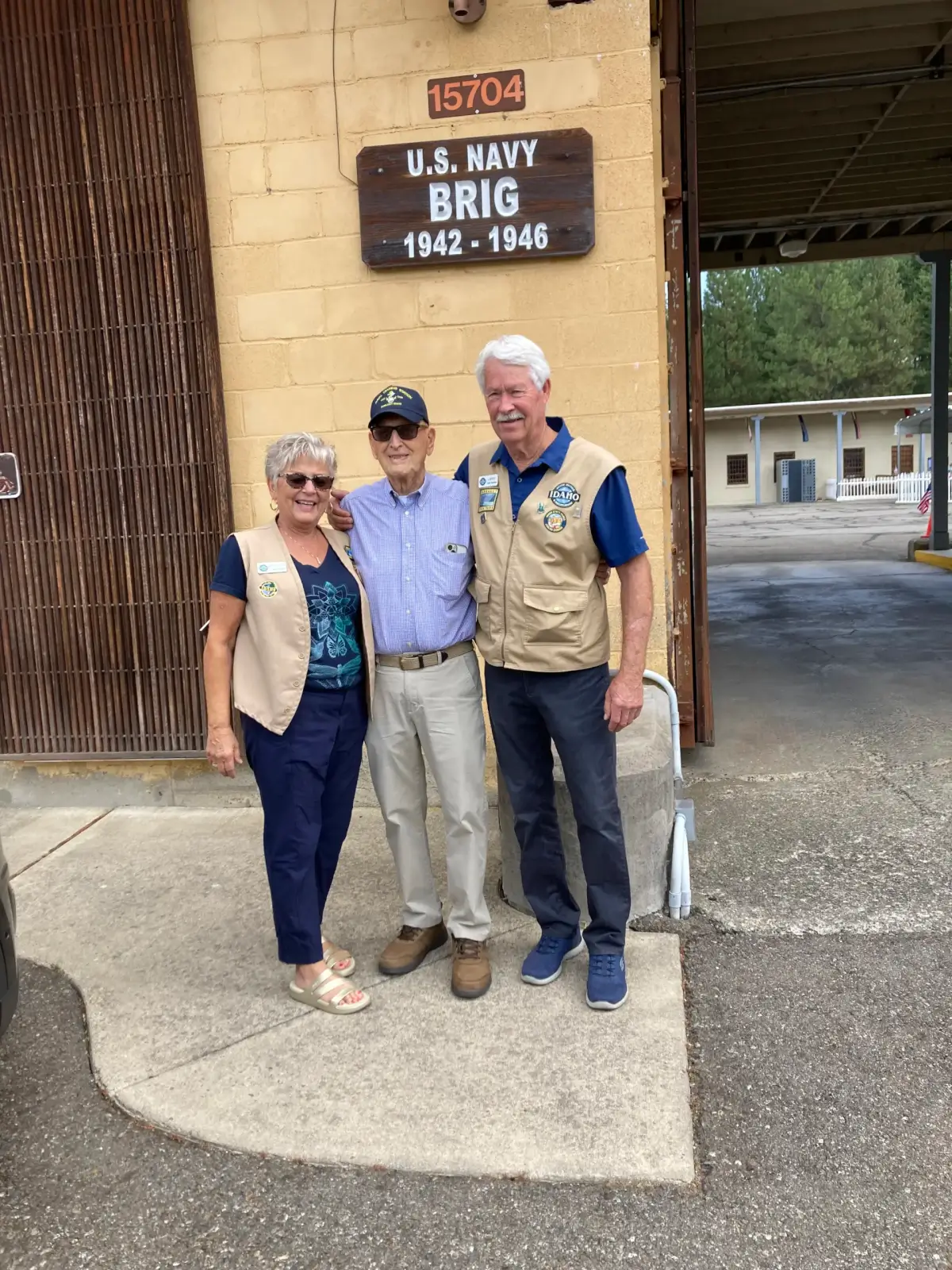
Stephens never thought he would return to Idaho. However, these days he is not just a resident but also an occasional “living proof” tour guide at Farragut, which is now a state park with a small World War II museum at the camp’s original brig. Several family members joined Stephens on his 100th birthday at Farragut, where he shared boot camp experiences with guests.
“I was able to show them pictures of the swimming pool where I worked,” said Stephens, a father of three, grandfather of eight and great-grandfather of 18. “I was honored to do it.”
He still chokes up when he thinks about the wounded men he helped. He still proudly straightens his shoulders while recounting the virtues of duty and discipline the Navy taught him. And he still smiles when he talks about Alice, his wife of 77 years who passed away four years ago.
“One person said that war is hell, and it is,” Stephens said softly. “So I’m thankful for the life I’ve had, the marriage I had, the kids I have.”
He isn’t just talking about war, either. At age four, Stephens and his eight-year-old sister Mary Elizabeth caught ear infections. Tragically, she died. Doctors told his parents to wait on planning her funeral — because they would most likely be planning his, too.
Nearly a century later, it’s safe to say the doctors were wrong.
“So many young men like me who were in the service, we got out, appreciated what we had and that we survived,” he said. “We were no longer individuals, but members of a group.”
The greatest group — and Greatest Generation — indeed.