

As the war in Iran continues to make headlines, military families have steeled themselves for the uncertainty that comes with conflict, with many facing deployment orders or rumors of such. While national attention to troop deployments lessened after the withdrawal from Afghanistan in 2021, military families know the need for strong support networks has never paused.
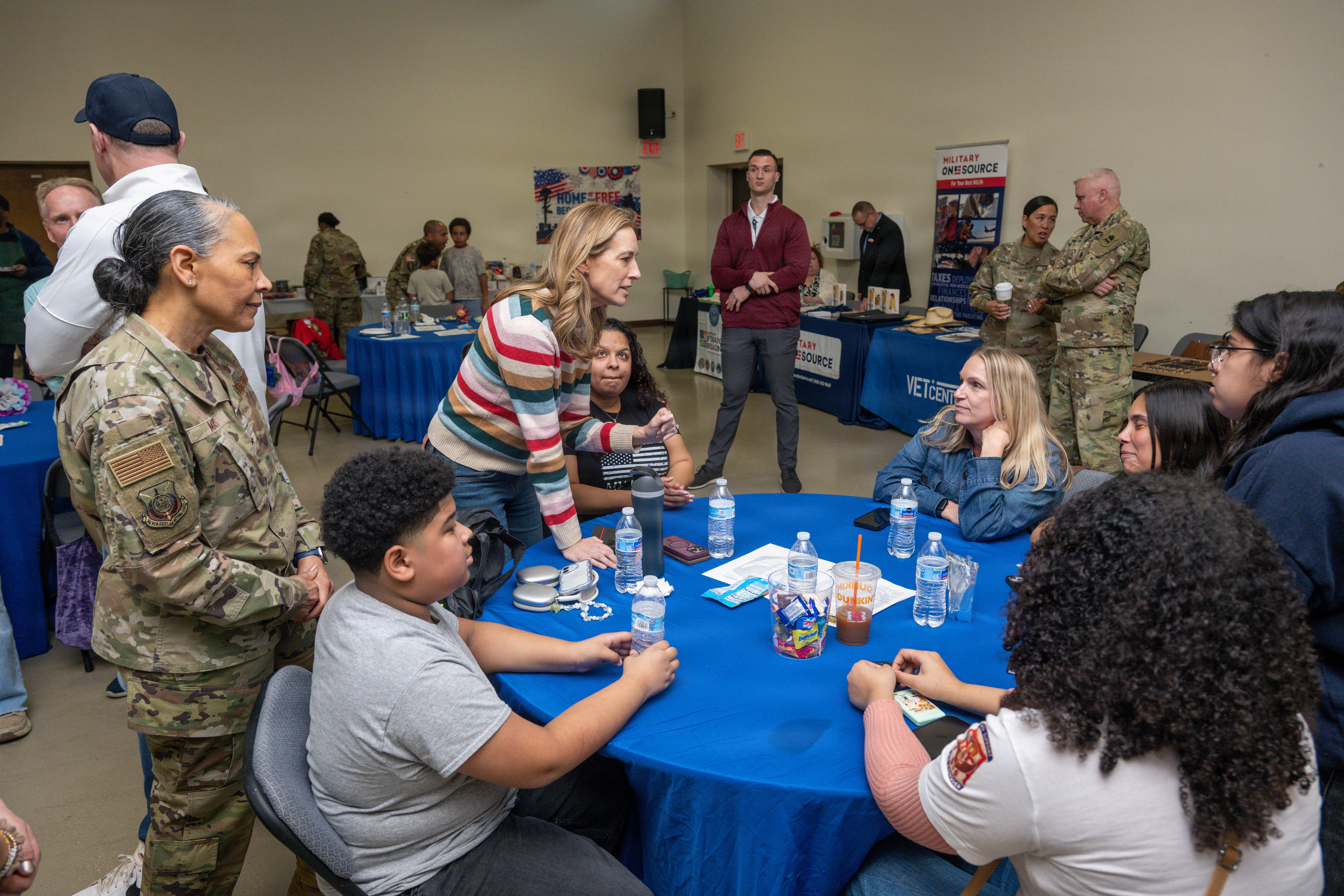
Across the services, family readiness programs — including the Army Soldier and Family Readiness Groups (SFRGs), the Navy Ombudsman Program, the Marine Corps Family Readiness Program, and the U.S. Air and Space Force Commander’s Key Support Program (CKSP) — serve as a bridge between commands and families. While their structures differ, the mission is largely the same: ensuring military families have access to accurate information, trusted resources, and a sense of community.
For Julianne Heskett, an Army spouse who has served in SFRG leadership roles for nearly eight years, the work centers on one simple goal: making sure families are never left navigating military life alone.






















“It’s not meant to be a social club,” Heskett said. “The heart of it is making sure families get accurate information and know they have someone to turn to.”
Lifeline for information
SFRGs operate through official channels tied to commands. Information flows from leadership through volunteers to the families that need it.
“If a flight comes in earlier than expected or something changes with a deployment, that information needs to get to families quickly,” Heskett said. “We can’t put that kind of information on public forums because of operational security.”
Instead, communication may happen through phone trees, text messages, or direct outreach.
More than deployment updates
For families stationed overseas or in remote locations, the networks also help them navigate daily life far from home. Heskett and her family have served all over the world, including South Korea and Alaska. In those environments, the absence of nearby relatives makes the SFRG network vital.
“We deal with hypothermia. We deal with avalanches,” Heskett said of her time in Alaska. “And moose will literally step in front of your car. They don’t freeze like deer — they just walk right out.”
“When you’re stationed far away from family, you need those connections,” she continued. “You need someone who understands what military life is like and who can point you toward the right resources.”
Sometimes the support these readiness groups provide is routine, like organizing meal trains for new parents or helping newly arrived families get settled. Other times, it means connecting families with specialized resources during more difficult moments, such as financial hardship, addiction struggles, or a death in the family that requires a Red Cross message to reach a deployed service member.
History
While today’s SFRGs are synonymous with Army life, their origin story was unofficial and born of necessity.
During the early years of the Vietnam War, Army spouse Julia “Julie” Moore, wife of then- Lt. Col. Hal Moore, helped organize informal networks of spouses after witnessing how families often faced devastating casualty notifications alone. As depicted in the film “We Were Soldiers,” based on Hal’s book with war correspondent Joseph Galloway, telegrams sometimes arrived without warning or support.
Julie and other spouses accompanied notification teams, creating an early model of community support that later influenced the Army’s approach to family readiness. By the 1980s, the Army began establishing Family Readiness Groups (FRGs) more formally within units, and by the 1990s the program had been codified as a command-supported structure designed to keep families informed and supported during deployments.
Rebuilding trust
Like many military programs, FRGs have evolved alongside technology — and not always smoothly.
In the early days of social media, many units relied heavily on Facebook groups and online forums to share updates with families. While convenient, those spaces sometimes blurred the line between official information and speculation.
“What started as an information network sometimes turned into gossip groups or complaint forums,” Heskett said.
That shift left some families skeptical of the program’s purpose. But Heskett believes recent efforts to move communication back through official channels may help restore confidence.
“When information goes back through the proper chain — command to SFRG to families — it helps rebuild that trust,” she said.
Why engagement still matters
Participation in a family readiness program is voluntary, and some families choose not to engage with unit programs. Heskett hopes more will reconsider.
“The purpose of SFRG is simple,” she said. “We provide accurate information, we connect people with resources, and we create a community so families don’t have to walk this path alone.”