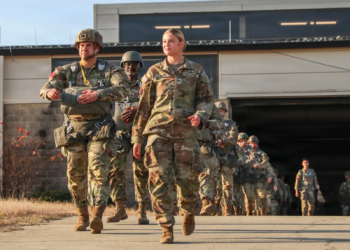



When Linda Miller retired from the Air Force in 2017, she told herself she couldn’t possibly have post-traumatic stress. But after 26 years, nearly all spent as a combat camera photographer, her mind was filled with images she could not erase.
“I was isolating really bad, because going out around groups of people, I felt like I couldn’t breathe,” she said. “It came to a point where I was in my kitchen pacing back and forth, and I wanted to scream. I wanted to punch the wall. I could feel the blood racing through my veins, and that’s when I knew I needed help.”
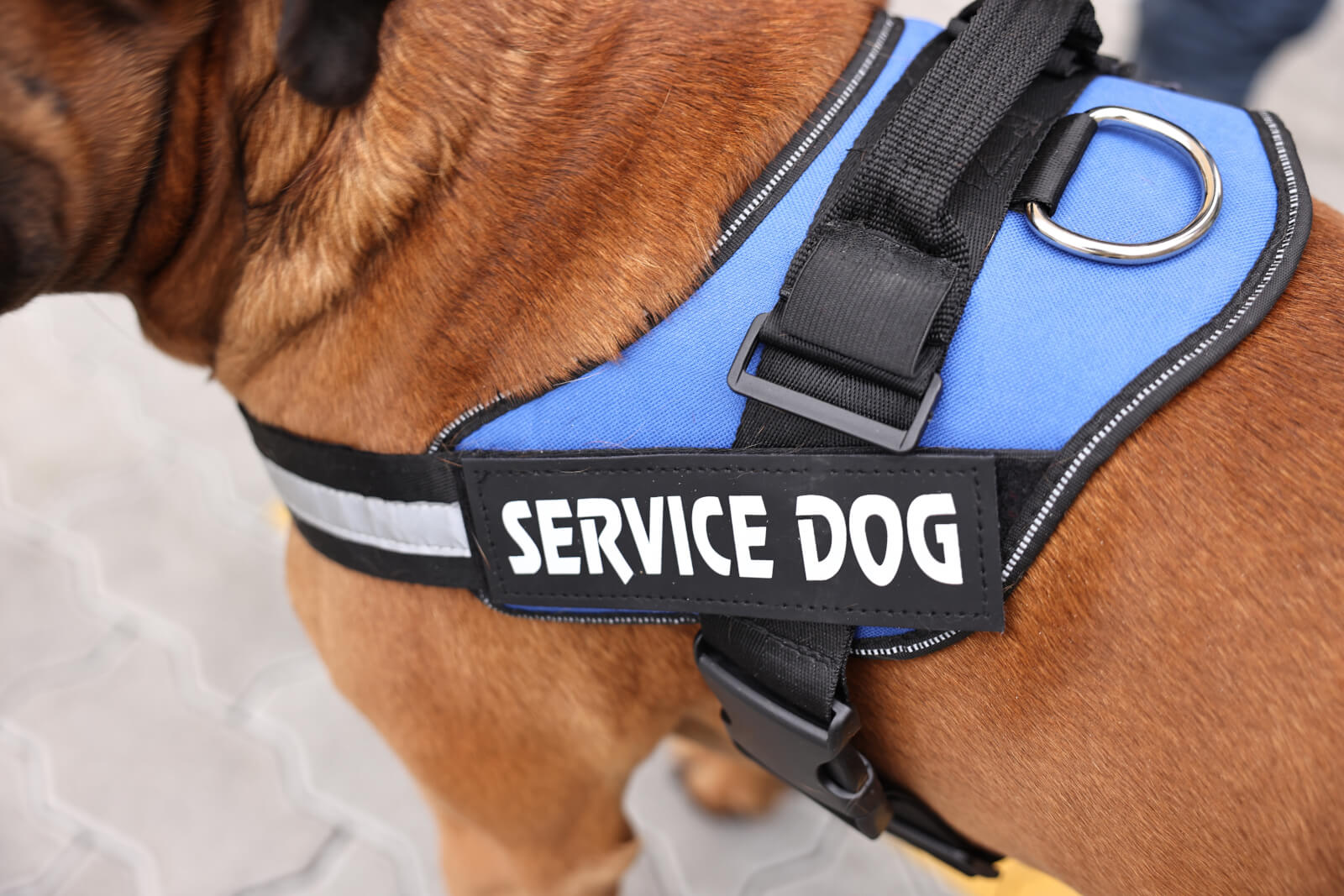
Her Department of Veterans Affairs (VA) therapist suggested getting a service dog, but no one seemed to know the process of obtaining one near her home in Las Vegas.























“The VA therapist was pointing to the recreational therapist, and the recreational therapist was pointing at primary care,” Miller said. “I wasn’t getting anywhere in the VA system.”
When a friend told her about PAVE (Paws Assisting Veterans), she was initially discouraged because she lived outside their usual region. But despite the fact that PAVE normally only provides service dogs to veterans in Oregon, Washington, California and Idaho, she was invited to fill out an application.
Michelle Nelson, a dog trainer and military mother, founded PAVE in 2010. The organization is accredited by Assistance Dogs International, ensuring that all dogs are trained to a standardized set of benchmarks and will be treated as a service animal under the Americans with Disabilities Act.
“We have dogs with certain temperaments, and we have a waiting list to ensure we find the best match,” said Vanesa Vizuete, program coordinator at PAVE.
Miller traveled to PAVE’s headquarters in Oregon, where the staff introduced her to a Labrador retriever named Lance without telling her that was the dog they were considering placing with her.
“A couple times I was getting really anxious,” Miller said. “I was just ready to walk out of the room. He was looking at me both times and then came right over to me. It was pretty cool.”

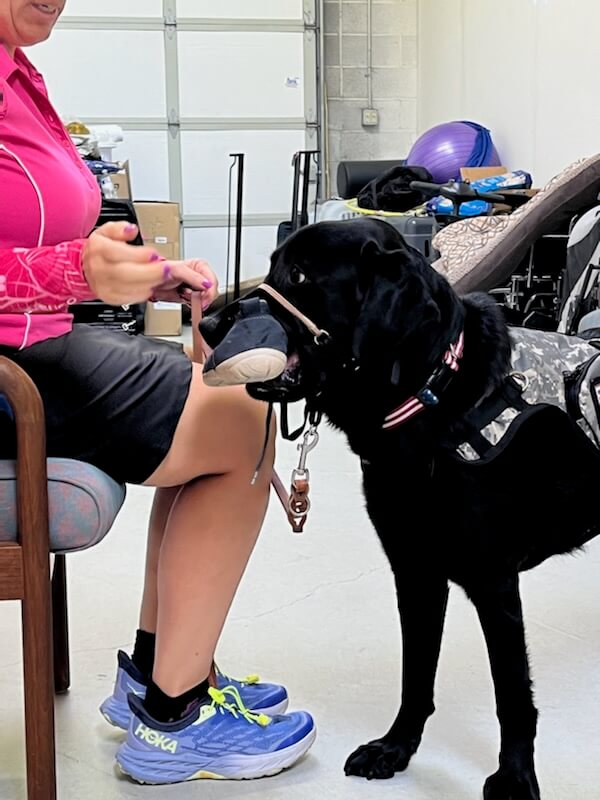
PAVE dogs are trained to recognize different scents caused by hormonal changes affiliated with panic attacks. As a result, they can alert their owners to remove themselves from stressful situations. They will wake their owners from nightmares and provide deep pressure therapy with their body weight.
“He sleeps on the bed with me,” Miller said. “Every single day, I had night terrors. I woke up, and I could not go back to sleep. I would not go back to sleep. With him right there, I haven’t had night terrors anymore.”
Vizuete said service dogs are a “tool on the path to recovery” for veterans.
PAVE also trains dogs to assist veterans with physical disabilities. They can turn lights on and off, pick up items their owner has dropped, and open and close drawers. Most of the dogs PAVE trains are Labrador retrievers, and, fittingly, they have excellent retrieval skills.
Thanks to grants and private donations, PAVE places service dogs at zero cost to veterans, despite each dog costing approximately $45,000 to train.
They also provide three weeks of intensive training for the veteran at their headquarters to teach them how to properly work with their new dog, then do monthly home visits for the first three months and yearly visits after that.
“We are going to ensure that the animal is healthy and that the training standards continue to be there as if they were just placed,” Vizuete said.
Having Lance for the past three years has fundamentally changed Miller’s life, and she is thankful to PAVE for providing her that opportunity.
“He’s made it so I can just live free, with so much more joy and happiness,” she said. “I have my battle buddy there just watching my back, and I’m watching his back. We’re a team.”
For more information, visit https://www.paveusa.org/.