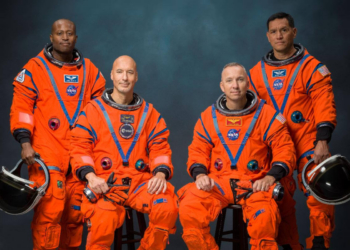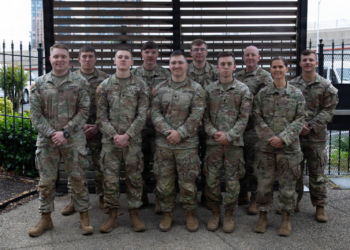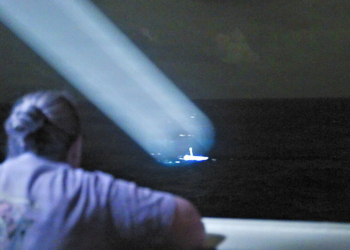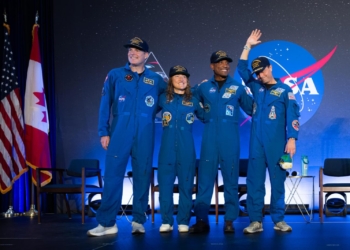



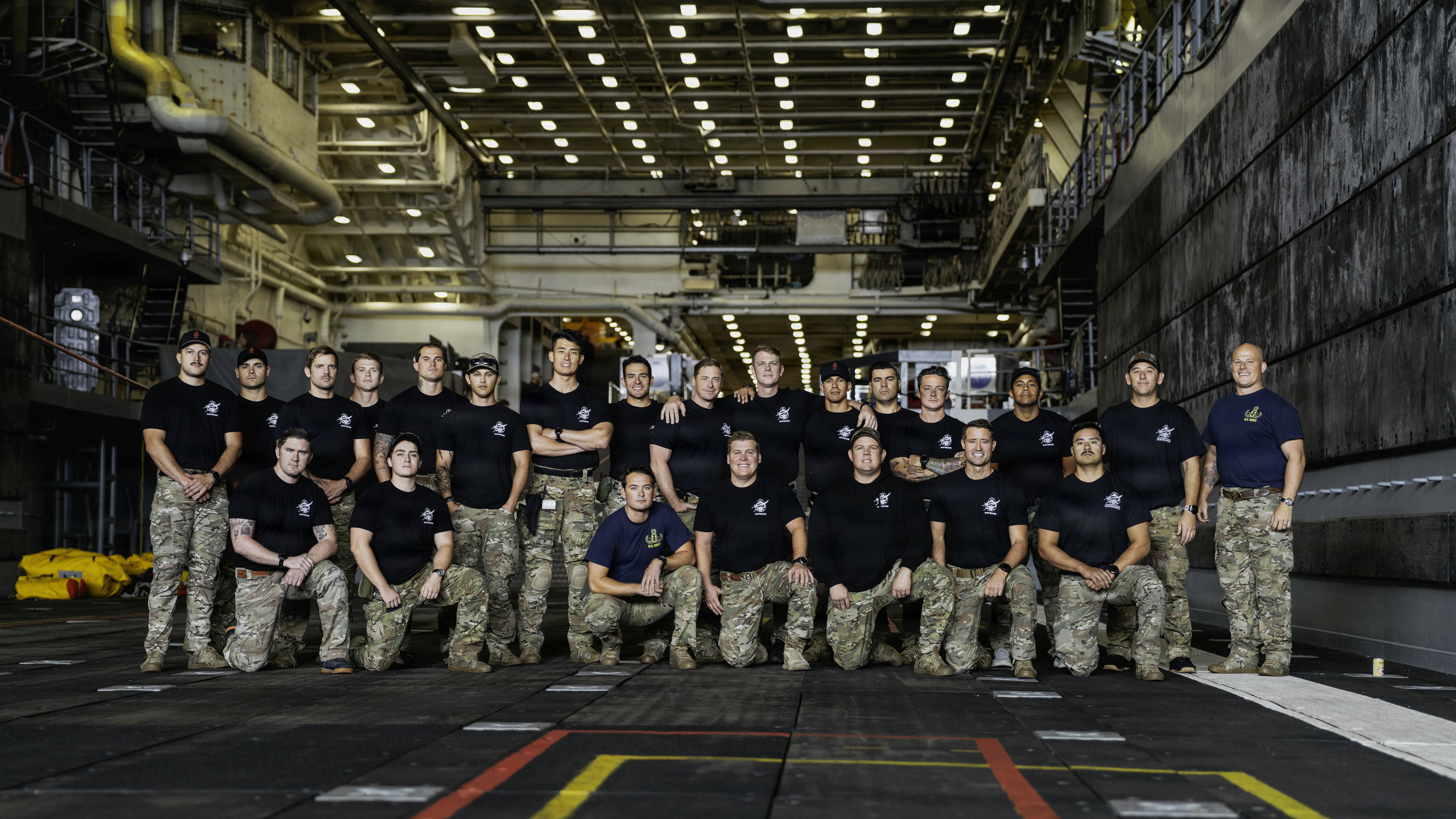
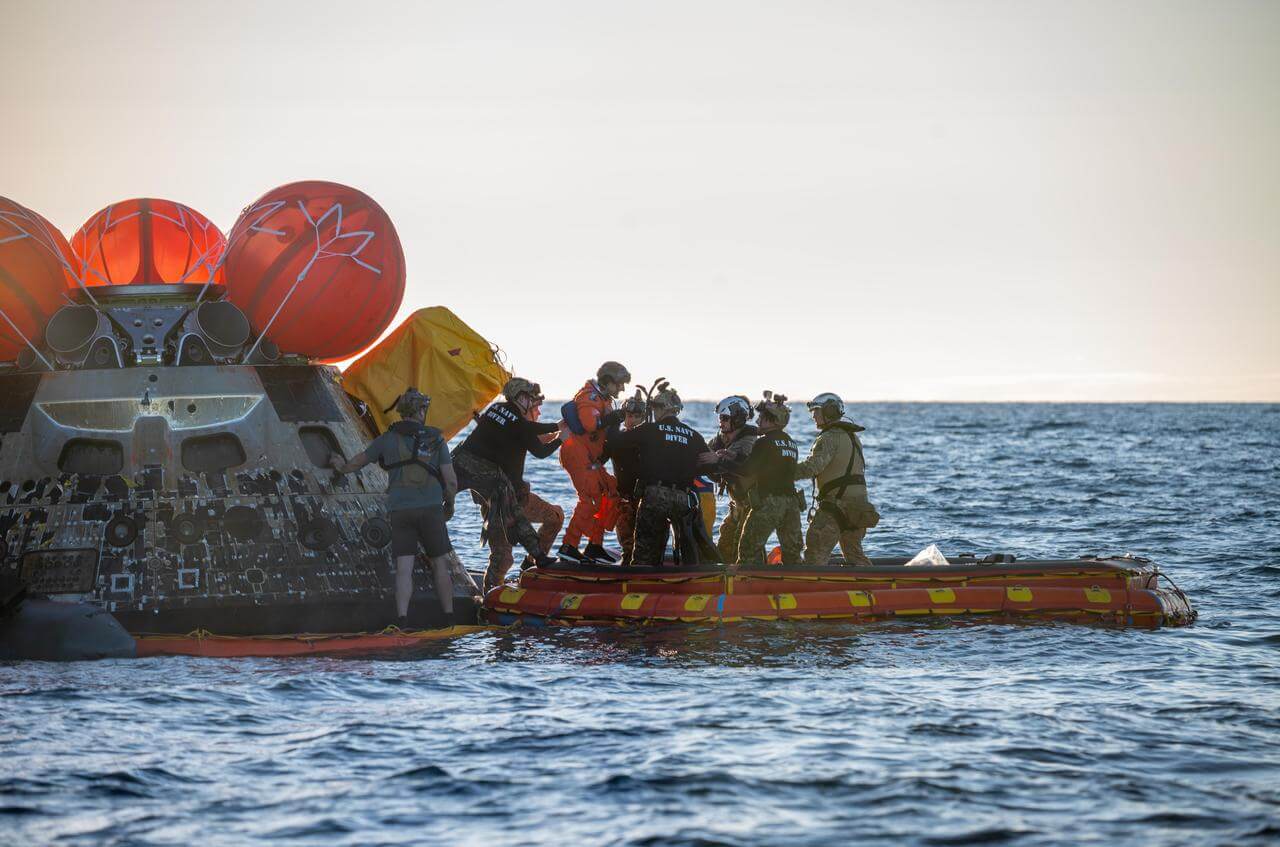
In the middle of the Pacific Ocean in April, a special team of Navy divers opened the Orion spacecraft to welcome the Artemis II crew back to Earth. Commander Reid Wiseman, Pilot Victor Glover, Mission Specialist Christina Koch, and Mission Specialist Jeremy Hansen made history flying around the Moon, and the dive team was tasked with safely securing the capsule and crew.
It was a once-in-a-lifetime assignment — for most people. For Master Chief Navy Diver Ryan Crider, this marked his second Artemis assignment, though this was the first crewed mission.
“I have been working with NASA on the Artemis program for the last [five] years. I was fortunate to have the opportunity to lead the first mission in 2022 while working at another command, so I helped develop a lot of recovery processes,” Crider said.























“As a Navy Master Diver, a lot of our job requirements overlap with the space industry,” he went on. “We rely on training to handle chaotic situations with a calm demeanor, and we work to ensure safe practices are followed during mission or training environments. NASA follows the same type of protocol, so it was easily translatable for our teams.”
To prepare for the recovery of the Orion capsule, which the crew named Integrity, the dive team trained in Houston, Texas, at NASA’s Neutral Buoyancy Lab with NASA’s divers to “learn how to install the stability collar and front porch [the inflatable raft that attaches to the capsule and provides stability for the crew when exiting], and how to safely extract personnel from the capsule without injury,” Crider explained.
Longstanding partnership
For the recovery of Integrity and the Artemis II crew, the USS John P. Murtha was designated as the recovery ship. The partnership of the Navy and NASA for space exploration is longstanding, “starting in the early 1960s,” according to Naval History and Heritage Command. However, one thing that may surprise the public, said Crider, is how long the two entities have collaborated for the shared goal of Artemis.
“What made this operation successful is that we didn’t just show up and figure it out on the fly. We had been working alongside these organizations for years before the actual recovery — running drills, doing underway tests, and having the hard conversations early so we could iron out any issues well before game day,” he said. “By the time we were out on that water for real, every team knew their role, every team trusted each other, and we had built a level of communication that felt natural because we had put in the time to earn it.”
Demands of the mission
The recovery team included four dive medical team members, each tasked with treating one of the returning astronauts. Lt. Cmdr. Jesse Wang and Senior Chief Hospital Corpsman Laddy Aldridge shared the requirements and demands of their mission.
“You have to be a dive qualified independent duty corpsman or doctor, which requires passing Navy dive school at [the] Naval Diving and Salvage Training Center in Panama City, [Florida],” explained Wang, who works as an undersea medical officer.
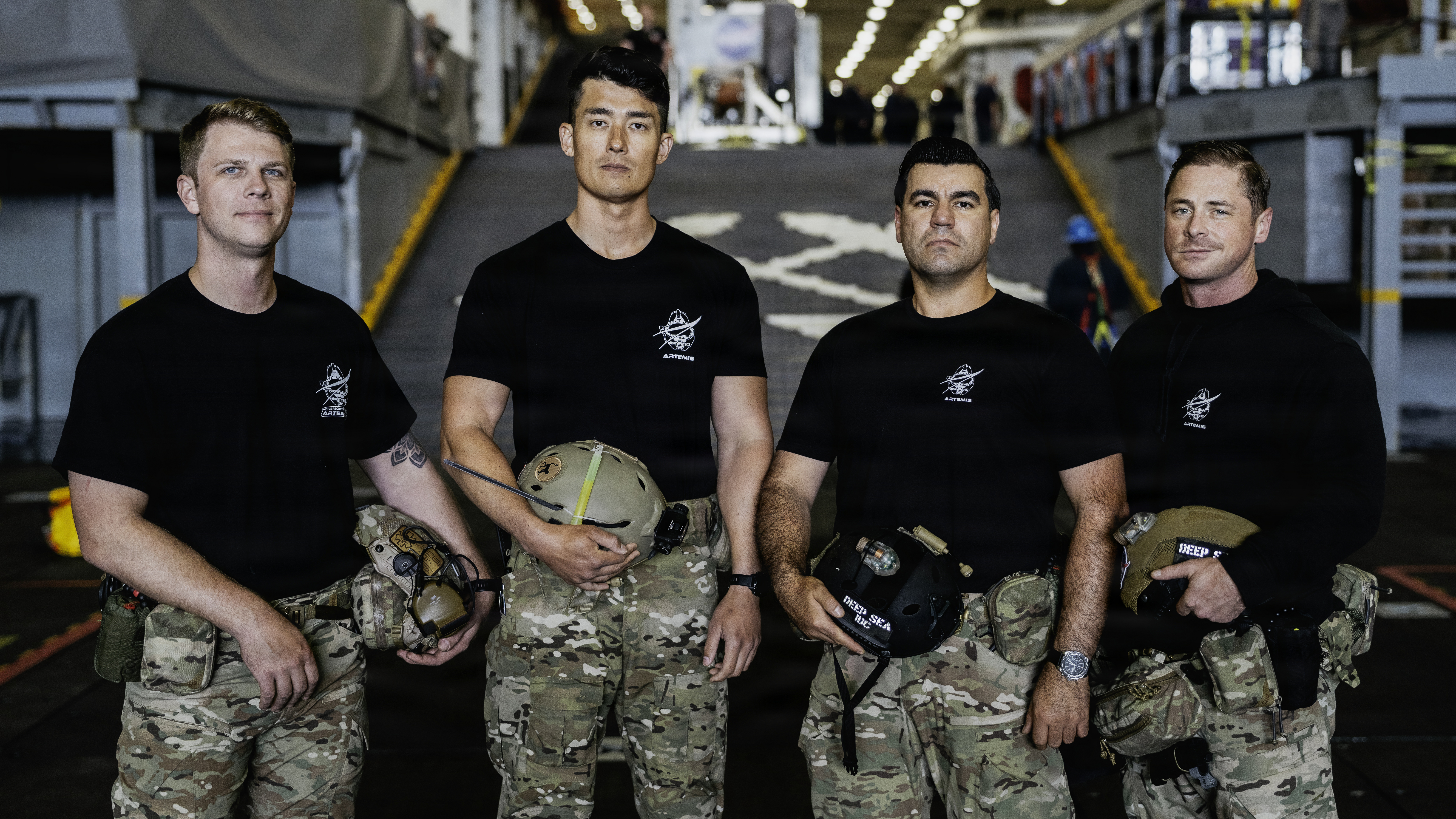
Assessing astronauts who have been in deep space requires specialized assessments outside the standard scope of care for Earthling patients.
“Space medicine poses its own unique pathology and physiology that requires esoteric knowledge,” said Wang, who assessed Koch. “We were trained well prior to recovery by NASA medical.”
“The initial assessment of the astronauts was approached as normal – assessing vital signs are a critical part of any initial patient assessment. Although I will say the astronauts were … totally different from the typical patient as they were very excited!” Aldridge said, who was assigned to Hansen.
As far as being part of such an historic event, especially with the world watching, Aldridge — with 19 years of service under his belt — said he prepared for it “with the same intensity” as other assignments. However, he admitted that he still had not “fully grasped the true gravity of this historical event.”
Yet even with the world watching, the team remained focused on the mission at hand.
“The visibility of recovery and historical nature of the event made me a bit nervous,” said Wang. “But I knew our team was well trained and ready to go.”