


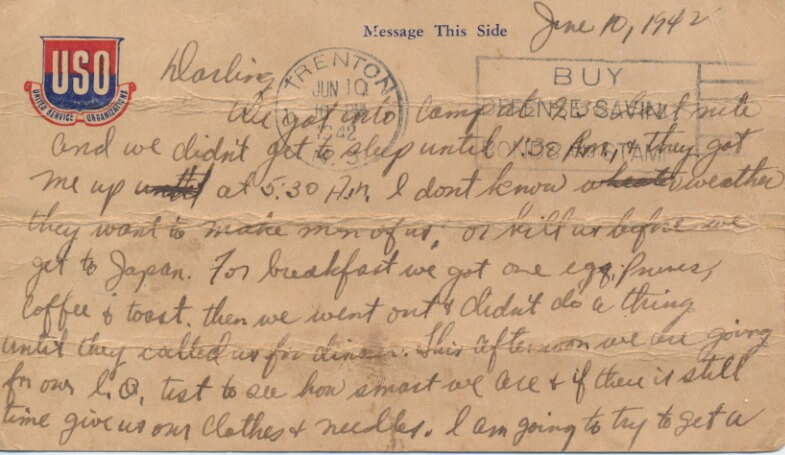
A collection of World War II letters is now available to the public through the USO’s “Letters Home” archive, launched May 13 during Military Appreciation Month. The collection, now over 80 years old, was released in conjunction with Focus Features upcoming film “Pressure,” and offers readers something that no secondary source can quite capture: a soldier’s attempt to describe the war as he was living it.
In a letter dated June 14, 1944, with the header “Somewhere in France,” Lewis “Speedy” Weber tried to put the scale of the Normandy invasion into words for his wife, Frances.
“I arrived safe and sound in France and it was quite thrilling and exciting to be able to be there when the curtain went up on the biggest show in the world,” he wrote. “When I was on my way across the channel, I felt just as safe as if I were in your arms, because as far as the eye could see, there was nothing but ships of every description.”






















Describing the sky above him, he added, “I had a hard time seeing the sun, because of the planes we had up there. It was a sight I’ll never forget.”
‘Front row for history’
Written between 1942 and 1945, Weber’s correspondence follows his Army service from North Africa to Sicily, Italy, England, and — ultimately — through Normandy. For USO Senior Archivist Mike Case, who prepared the collection, the letters stand out not only because of where Weber served, but because of how carefully he observed both the monumental and the mundane.
“He was front row for history,” Case said. “Since it’s written in the first person and is very descriptive, it’s a way to see things through his eyes. It keeps the history alive.”
“These letters were written for one person. Now, for the first time, they belong to all of us,” said USO CEO Mike Linnington in a press release.
Weber had a knack for recording the details that make the past feel close at hand. One day he described his first Army haircut — “which cost me 30 cent” — and explained that a proper “G.I. haircut” left “1½ in. of hair on your head.” More than a year later, writing from Sicily, he recounted German Stukas and Focke-Wulf 190s swooping overhead and remarked that his unit had captured so many Italian soldiers that they could “make Sgt. York look sick,” invoking the most famous American hero of the First World War. Between those moments, he asked Frances for razor blades and pimento cheese, worried about family members back home, and sketched out plans for the second honeymoon they would take when the war was over.
The collection contains roughly 300 letters, all but one written by Weber during the nearly three years the couple spent apart. Although only a single letter from Frances survives in the bundle, her presence is everywhere. Weber responds to her news, comments on photographs she sends, and apologizes after misunderstandings. Some letters are deeply romantic with a few delightfully flirtatious lines.
Overall, a read through of the letters feels remarkably familiar. Weber writes about campaign ribbons, foxholes, and the liberation of Paris, then pivots to requests for razor blades, complaints about Army food, and teasing notes to Frances about her “gams” and freckles. The mix of longing and the mundane will be one familiar to military couples who read the collection, this analog equivalent to emails exchanged during deployments and separations today. A blend of eyewitness accounts and hot takes buried within everyday conversation as part of the larger effort to stay connected across thousands of miles.
Hidden ‘treasures’
The letters arrived anonymously at a USO center in New York before eventually making their way to headquarters in Arlington. No one knows exactly who sent them, and the organization hopes relatives may one day come forward with more information. More broadly, Case hopes the collection will encourage others to take a second look at the boxes tucked away in attics, basements, and closets, whether they contain letters from World War II, photographs from Vietnam, postcards from Korea, or digital records from more recent conflicts.
“People are probably sitting on treasures they have no idea about,” he said.
Which is really very fun to think about.
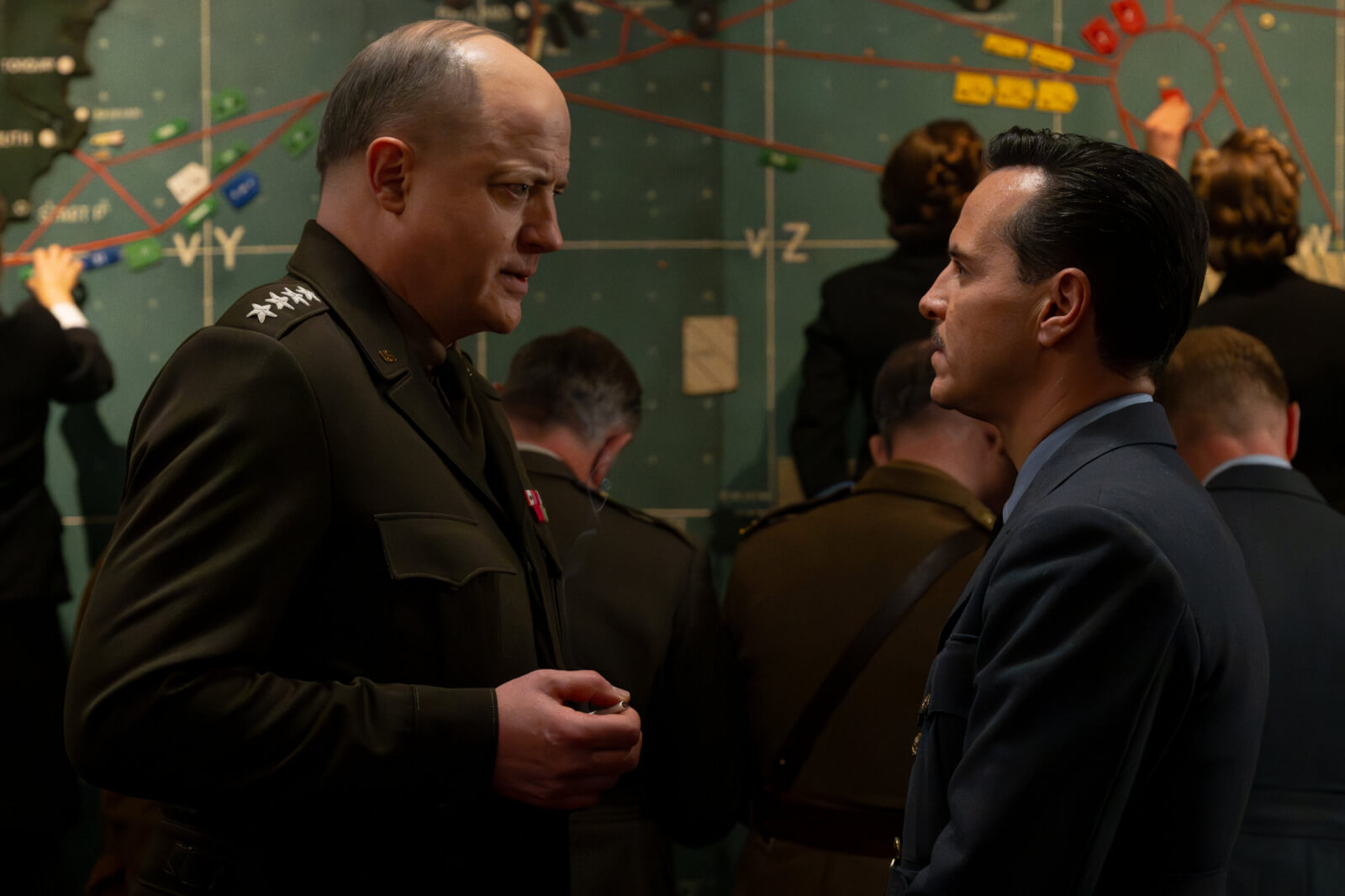
For anyone who has ever wondered what World War II looked like to the men who lived it, Weber’s letters offer an answer in his own words. The letter collection was released in conjunction with Focus Features upcoming film “Pressure” — featuring Brendan Fraser as General Dwight D. Eisenhower and Andrew Scott as Captain James Stagg — which covers the difficult decisions made in the days leading up to D-Day. On the USO website, readers can explore Weber’s letters and hear actor Scott read one of them.
The film “Pressure” is in theaters May 29, and tickets go on sale beginning May 13. The film explores the critical days and decisions leading up to D-Day, bringing a cinematic lens to the same themes of uncertainty, leadership, and responsibility echoed throughout these letters.