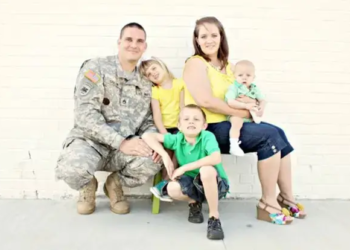


More than half of veteran marriages begin after military service ends. A 2024 RAND study found that 53% of married veteran couples tied the knot post-transition. For many spouses, that means stepping into a relationship with someone whose identity has already been shaped by military service — without the shared language or built-in support systems that active-duty families rely on.
Hannah O’Brien knows that feeling well. She met her husband, a Marine Corps veteran, while earning her master’s in social work at the University of Texas at Austin.
“I really had no connection to the military community or any understanding of military culture,” she said. “Every time I talked to people in my life, they just didn’t get it. They looked at me and said, ‘Wouldn’t it be easier to not be in this relationship?’”























When she went searching for support, she expected to find a group for veteran spouses. Instead, the best recommendation many had was Al-Anon. That gap eventually led her to the Veteran Spouse Network (VSN), founded in 2016 by Dr. Elisa Borah at UT Austin. At first, VSN wasn’t even meant to be a support network; rather it was a vehicle to bring spouses together to conduct research. But an undeniable gap emerged.
“Dr. Borah hired veteran spouses around major cities like Austin, Dallas, Houston and San Antonio to host community events,” O’Brien explained. “And she found out that the community connection … that was what people actually wanted. That’s what they needed more of.”
Veteran spouses often occupy an invisible space in the military ecosystem. Active-duty spouses have resources and installation or unit support. Veteran spouses, on the other hand, are usually left to figure things out on their own.
“Veteran spouses are not often targeted for support,” O’Brien said. “Sometimes you’ll see, ‘Oh, and the family,’ but it’s always in the fine print. It’s not designed for you, but you can be there if you want.”
The top issue VSN hears about is mental health. “Veterans struggling with their mental health, not seeking care, or refusing to address it. It affects the relationship and the family, and spouses don’t know what to do,” O’Brien said.
Today, VSN runs peer-led groups, leadership training, and resource navigation programming for spouses across the country. The approach is intentionally inclusive, bringing spouses from different generations, backgrounds and service eras.
“I remember when we first started running peer support,” O’Brien said. “There were these 40 women, all significantly older than me — some of them had been married longer than I’d been alive. I had major imposter syndrome. But within 15 minutes, I felt so included.”
The spouses all reassured O’Brien that while they were all at different stages, she was still included in the lifestyle.
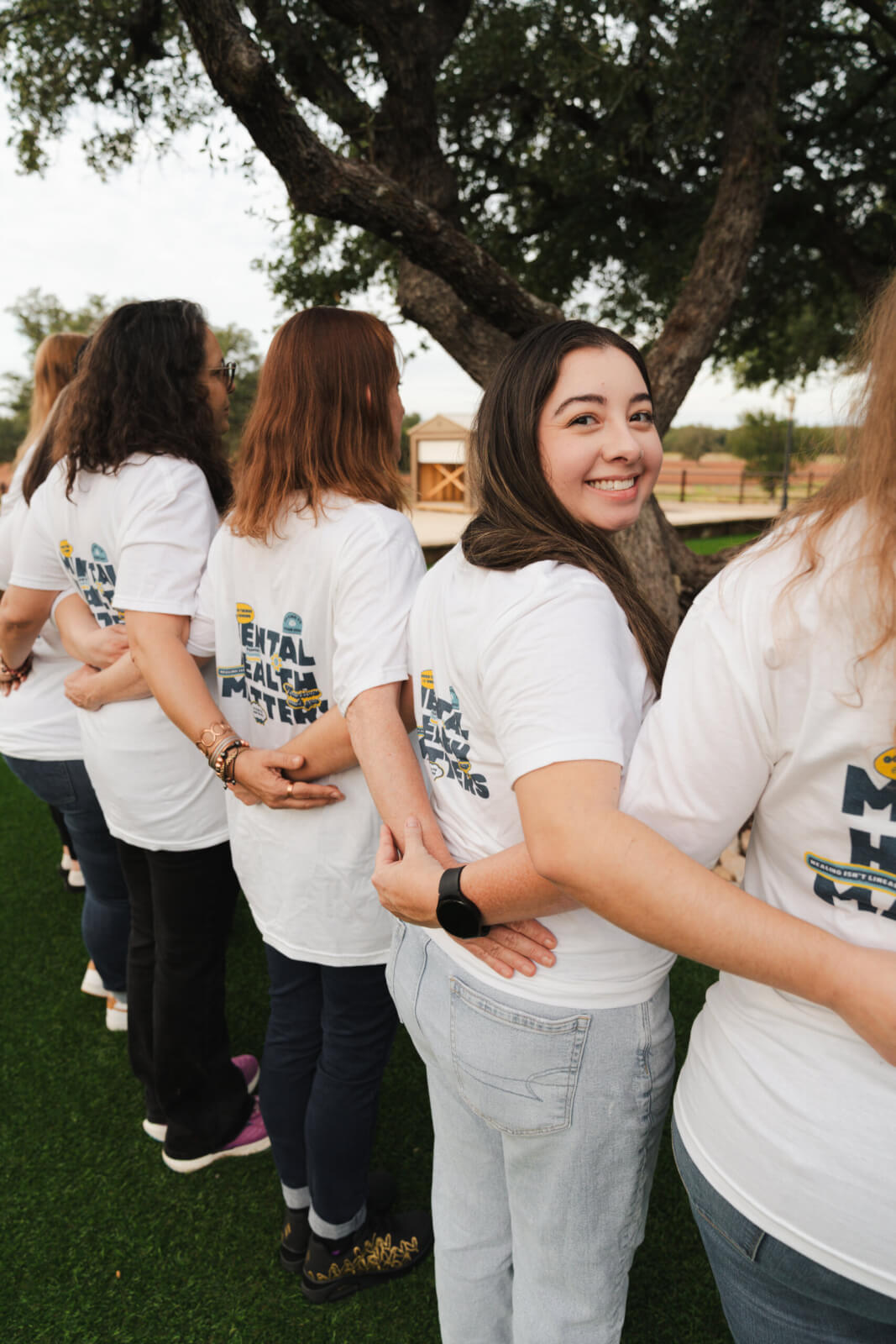
VSN’s programs reflect the different realities spouses face. “For Vietnam-era spouses, they’re dealing with aging, caregiving, navigating healthcare, even end-of-life planning,” O’Brien explained. “Post-9/11 spouses are often focused on mental health and how it affects the relationship and family. Now we’re trying to target younger spouses because none of us know yet what their experience will look like.”
As the veteran population grows more diverse — 17% of post-2001 veterans are women and 40% are nonwhite — the spouse community is shifting too. VSN has also expanded, thanks in part to partnerships with organizations like Face the Fight™, a USAA Foundation initiative focused on ending veteran suicide.
For O’Brien, this work is very personal. “I totally believe it’s very possible that my husband and I would not be married, we wouldn’t have two beautiful children, if I hadn’t found this job and built this community,” she said.
Veteran spouses can find that same support through VSN’s virtual and in-person programs, offered nationwide and in Texas. Those seeking to become involved can explore upcoming seminars or apply to become a peer-to-peer mentor.