

America may decide when a war is over, but the people who fought it don’t always get that choice. For generations, Memorial Day carried the kind of distance that time eventually creates. Wars ended, troops came home, years passed, and memory settled into the corners of our minds. But, for many post-9/11 veterans, that never happened. I’ve noticed Memorial Day changing as I’ve gotten older. Somewhere along the way, it stopped making me think about wars and started making me think about people. The fact that lawmakers continue debating suicide prevention, traumatic brain injury, and the long-term effects of military service years after these wars officially ended says something important: many veterans never fully left them behind. That leaves a harder question: Why do these wars still require so much attention long after much of the country turned its attention elsewhere? Maybe it’s because some parts of war never stayed where people expected them to.
That may be why Memorial Day feels different for many post-9/11 veterans. The headlines faded, the withdrawal from Afghanistan came and went, and public attention shifted elsewhere, as it always does. Countries move on because they have to. New crises emerge, attention shifts, and political eras end. Individuals rarely move on that cleanly.
Memorial Day tends to bring that divide into focus for me because I don’t think about distant wars anymore — I think about people I know. The friend who sat beside me on the mess decks and somehow became part of my definition of home. The friend whose number still lives in my phone because deleting it feels too permanent. I can still hear BM3 Tabitha Morehouse yelling at me through our berthing area: “SHIPMATE! Fix your hair!” I absolutely refused to cut my hair short enough to wear it down and spent years stuffing long, lofty locks into a hair tie tight enough that not a single strand could escape. Only they slipped through the grip of that band quite often, prompting shipmates to constantly remind me to secure my hair. Morehouse knew good and well I was sick to death of hearing it all day, which was exactly why she got such a kick out of busting my chops over it.






















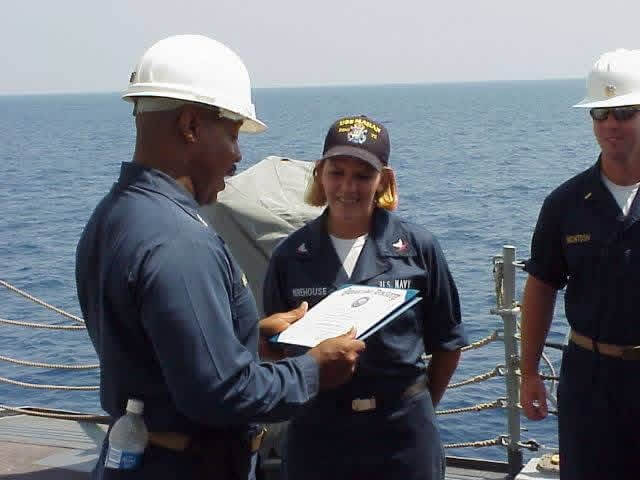
an award, as First Lieutenant Christopher McIntosh looks on. Courtesy photo.
Sometimes we’d get into it and bicker back and forth because one of us was cranky, tired, or hangry. I miss her smirky laugh. Knowing her life was cut far too short makes me grateful, in hindsight, that I was ever able to be a source of laughter for her. The inside jokes, the nicknames, and the stories that nobody outside our circle would fully understand.
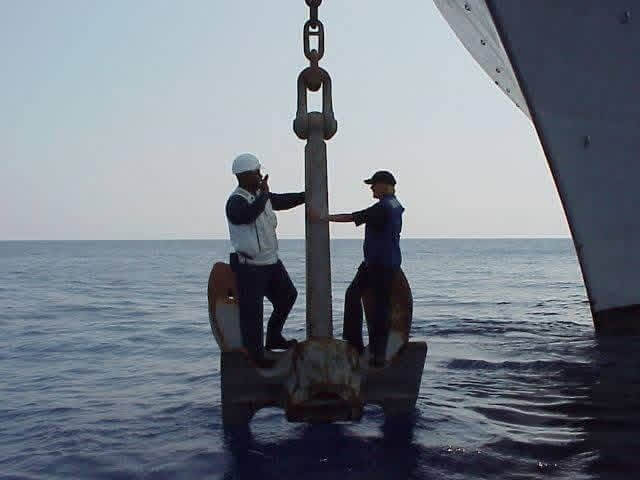
Morehouse during a reenlistment ceremony while underway. Courtesy photo.
Every Memorial Day, phones across the country still light up with reminders that algorithms never learned the difference between memory and grief. A birthday notification pops up on the calendar, or a Facebook memory resurfaces, and your heart catches for a moment. Even brief reminders have a way of bringing back much more than a date or a picture.
I’ve stood in grocery store lines and watched a deployment photo show up on my screen. One second I’m reaching for my wallet and staring at cereal boxes. Next, I’m back with people I haven’t thought about in months. The line keeps moving, but I don’t. Small moments can erase years in an instant.
Every generation carries war differently. But many post-9/11 veterans are living in a strange space where Iraq and Afghanistan became history long before many losses ever felt distant. But the losses didn’t stop when deployments ended. Some losses happened overseas. Others came much later. Researchers and veteran advocates have warned for years that the human cost of the post-9/11 wars didn’t end when troops came home. The Costs of War project at Brown University estimated that more than 30,000 post-9/11 veterans and service members died by suicide, compared with roughly 7,000 killed during war operations. Numbers like that point to something many veterans have already experienced personally. Post-9/11 veterans aren’t only remembering friends killed in Iraq and Afghanistan. We’re also remembering people we lost years later.
We’re remembering the Marine who survived multiple deployments but struggled after leaving service. We’re remembering the soldier whose wounds never announced themselves in obvious ways. We’re remembering the friend who looked fine in photographs until the phone call that changed everything. Military communities learn this reality too; the phone calls and losses rarely stop affecting only one person. The country often prefers a cleaner timeline for war because people understandably want wars to move from deployment to combat, from combat to homecoming, and then to healing, but war doesn’t follow a path that neatly.
For many veterans, Memorial Day can feel less like looking backward and more like reopening conversations that never really ended. It isn’t because one generation loved harder or carried more. It’s because many post-9/11 veterans still live unusually close to loss. America may decide when a war is over; Memorial Day reminds us that people don’t always get that choice.
If you or a loved one are in crisis, please call, text or chat 988. The 988 Lifeline provides free and confidential support 24/7.
Natalie Oliverio is a journalist, freelance writer, and Navy veteran whose work has been published in The Washington Post, The War Horse, Mother Jones, VeteranLife, MyBaseGuide, and MilSpouses. She earned her Bachelor of Arts in Multidisciplinary Studies with a concentration in Professional Writing and Editing from West Virginia University.
She is the founder of Military Talent Partners, an executive advisory and mentorship firm specializing in military talent strategy and workforce development. Natalie has helped connect thousands of veterans and military spouses with meaningful career opportunities. A proud West Virginia native, she enjoys spending time with her daughter Isabella and their dogs, Bear and Blanca.